
Ninoy Aquino International Airport Terminal 4 Map (Most Up-To-Date)

NAIA Terminal 4’s footprint is no longer an active passenger terminal inside the Manila airport complex: the former Domestic Road building is decommissioned, and its former domestic traffic has been absorbed into Terminal 2’s South Wing within Manila’s primary air hub. The practical “Terminal 4 map” for 2026 is therefore a two-part mental map: the closed Domestic Road site (now a dead-end) and the working replacement flow at the Terminal 2 hub for check-in, arrivals, and inter-terminal transfers.
Map Table
| Status | Current Passenger Use | Primary Replacement Flow | Primary Risk |
|---|---|---|---|
| Decommissioned (Domestic Road site) | None | Terminal 2 South Wing | Wrong-terminal arrival |
| Former T4 carriers | Reassigned | T2 South Wing counters | Entrance security queue |
| Inter-terminal transfer | MIAA shuttle | T2 Arrivals bays | Unreliable headway |
| Ground pickup | Grab/taxi bays | T2 Arrivals bay system | Bay confusion |
Ninoy Aquino International Airport Terminal 4 Map Strategy
- Treat “Terminal 4” as a misdirection risk: hard-code “Terminal 2, South Wing” in ride-hailing notes and driver instructions to avoid the Domestic Road dead-end.
- Use bay numbers as your anchor system for arrivals pickups and transfers at Terminal 2, then triangulate with the “TRANSFERS/SHUTTLE BUS” overhead signs so you don’t drift into coupon-taxi zones.
- Build a buffer around Terminal 2’s entrance security choke during the morning wave; the queue can spill to the driveway at the departures doors.
- Reduce crowding stress by aiming for seating clusters near the rotunda and concourse ends, then pivot toward gates only when boarding screens stabilize.
2026 Ninoy Aquino International Airport Terminal 4 Map + Printable PDF
Terminal 4’s Domestic Road facility remains closed in 2026, with passenger processing routed through NAIA Terminal 2 (Centennial Terminal), primarily the South Wing for the carriers historically associated with T4. The printable “map” you need for 2026 is effectively a Terminal 2 South Wing map plus a closure/redirect mental overlay for Domestic Road so drivers and passengers don’t get trapped at the old curb.
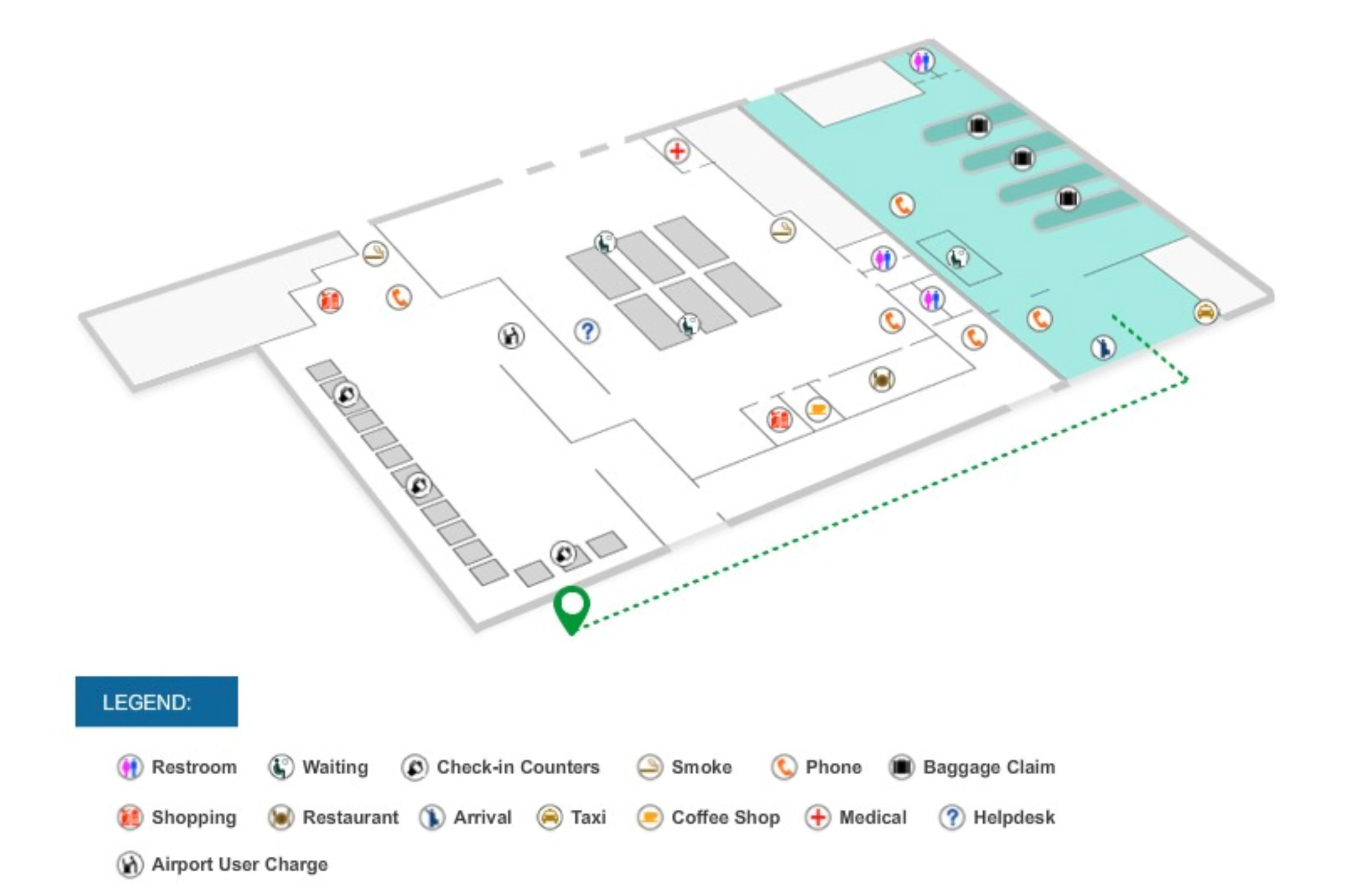
2026 Ninoy Aquino International Airport Terminal 4 Map Guide
What is the exact pickup point for the inter-terminal shuttle serving Terminal 4 traffic (bay number + nearest landmark/signage)?
The inter-terminal shuttle pickup for former Terminal 4 traffic is at NAIA Terminal 2’s Arrivals-level curbside near Bay 17, under the overhead “TRANSFERS” / “SHUTTLE BUS” signage. The stop sits on the secondary island, not the inner pickup lane, so you typically cross one active lane to reach the waiting area.
- Arrivals level curb at Terminal 2, Bay 17 zone
- Secondary island stop beside the UBE Express (P2P) stop area
- Overhead wayfinding reading “TRANSFERS” or “SHUTTLE BUS” near the bay markers
- Open-air waiting pocket at the island edge facing the arrivals curb flow
What is the exact walking distance (meters) from Terminal 4 Arrivals exit to the Grab Booth / official pickup point?
Terminal 4’s Domestic Road building is decommissioned, so there is no current Arrivals exit-to-Grab Booth walk at that site. The last operational layout at the old Terminal 4 footprint put the Grab Booth about 65–80 meters from the Arrivals exit, with the route forced into a sharp right turn immediately outside baggage claim.
The walk ran along a narrow curbside strip between the terminal wall and the pickup driveway, then terminated at a small traffic-island booth positioned between the Bay 4 and Bay 5 markers. The stress point was the final approach, where passengers had to cross a live vehicle lane to reach the island, and parked vans or tents could block the booth sightline from the exit.
Where does the check-in line overflow during peak periods at the old T4 footprint—what corridor or fixed landmark does the queue spill into?
The old Terminal 4 check-in overflow spilled onto the Domestic Road curbside sidewalk outside the terminal facade. The queue propagated along the exterior public right-of-way rather than staying inside a lobby because the building’s check-in depth was too shallow to contain peak flight waves.
The line typically extended past the primary guard post and continued along the sidewalk toward fixed adjacent landmarks on Domestic Road, including the Zest Air ticketing office and the Red Coconut establishment. At its worst, the overflow became an exterior “sidewalk queue” exposed to vehicle exhaust from jeepneys and buses moving through the Domestic Road corridor.
Where are the largest seating clusters after security (exact zone/gate-side section) where passengers can realistically sit when the terminal is packed?
The largest post-security seating cluster in the old Terminal 4 was the single shared Pre-Departure Hall serving Gates 1 through 5, with the most reliable “find-a-seat” zone along the glass wall facing the tarmac. Seating was arranged as long rows of metal gang chairs with no true gate separation, so crowding from any one flight wave immediately flooded the entire secure hall.
When seats were gone, the overflow sitting area formed on the floor edges of that same hall, especially along the glass perimeter and near structural columns where people clustered around power access. Because Terminal 4 is now decommissioned, the comparable “cluster strategy” for current operations shifts to Terminal 2’s secure-side rotunda area and the concourse ends where higher-numbered domestic gates concentrate seating.
If a driver approaches the old Domestic Road terminal area, where is the first physical redirect point (exact spot/signage) that indicates the terminal is closed/moved and where to go instead?
The first physical redirect point is at the entry intersections feeding Domestic Road, where signs read “Terminal 4 Closed – Proceed to Terminal 2.” Drivers get their earliest save at the Domestic Road junction with Andrews Avenue (Rotunda-side approach) or at the Domestic Road junction with NAIA Road (southern approach).
The most reliable “decision moment” is before committing onto Domestic Road: look for the closure/redirect boards at those two junctions, then stay on Andrews Avenue or NAIA Road to reach the Terminal 2 departure ramp. Missing this signage often forces a full Domestic Road traverse past the boarded-up terminal before you can reroute.
Which door/exit is the most direct path from Arrivals to the metered/white taxi queue (single best exit point)?
The most direct path runs from Terminal 2 South Wing Arrivals exits closest to Bays 20–23, which align with the metered/white taxi loading area. This keeps you in the South Wing arrivals curb flow instead of walking the length of the terminal from a North Wing exit.
The metered taxi area is bay-driven rather than a single booth right at the first door, so the practical “best exit” is the Arrivals door that drops you nearest the Bay 20–23 markers on the South Wing side. From that door, follow the bay signage down the arrivals curb to the white/metered taxi queue, staying clear of the coupon-taxi cluster that tends to dominate the more central curb positions.
What is the shortest car route from the old Terminal 4 curb area to NAIA Terminal 2 departures drop-off (specific connector roads/turn sequence)?
The shortest car route is Domestic Road southbound to NAIA Road, then the signed left fork up the Terminal 2 Departures ramp to the South Wing drop-off. Travel is about 2.4 km, running ~6 minutes in free-flow and 25+ minutes in peak congestion.
| Step | Turn sequence | Landmark triangulation |
|---|---|---|
| 1 | Drive south on Domestic Road ~1.2 km | pass the dark/boarded old terminal frontage on Domestic Road |
| 2 | Right turn onto NAIA Road (MIA Road) | major junction at the end of Domestic Road |
| 3 | Merge left and continue straight ~1.0 km | pass the Nayong Pilipino / Philippine Village Hotel redevelopment zone on the right |
| 4 | Take the left fork marked “Terminal 2 DEPARTURE” | fork where signs split “Terminal 1” straight vs “Terminal 2” left/ramp |
| 5 | Ascend the ramp and continue to far end | South Wing end of the departures curb for AirAsia/CebGo/AirSWIFT-era drop-offs |
Inside NAIA Terminal 2, what is the exact check-in area location (entrance/wing/landmark) used by former T4 domestic operations during reassignment periods?
The reassigned former Terminal 4 domestic operations use NAIA Terminal 2’s South Wing Departures level, concentrated toward the far southern end of the check-in concourse. Being dropped at Terminal 2 without the “South Wing” qualifier is the common failure mode because the terminal’s V-wing layout makes the North Wing curb a long walk from these counters.
AirAsia Philippines tends to sit in the central block of South Wing counters (roughly Counters 42–60), while CebGo and AirSWIFT have commonly been placed farther down the same South Wing hall (roughly Counters 61–81) near the end of the departures corridor. The operational choke to plan for is the entrance security screening at the South Wing doors, where morning queues can spill back onto the departures driveway.
Where is the new Terminal 4 construction site (exact boundary/pin + nearest access road) at the former cargo-terminal area between terminals?
The new Terminal 4 construction site is on the former International Cargo Terminal (ICT) property between NAIA Terminal 1 and Terminal 2, fronting the main airport loop road. The practical boundary is the secured construction zone adjacent to the Terminal 1 departures-ramp exit and along the Terminal 2 approach corridor, where you can see barriers, heavy equipment, and cleared warehouse footprints.
Access-wise, it sits off the same landside loop that connects Terminal 1 and Terminal 2 via NAIA Road, but it has no passenger curb, no public entry, and no valid drop-off point. For navigation, treat it as a “pass-by landmark” on the loop between T1 and T2, not a destination—drivers should continue to the signed Terminal 2 departures ramp (for reassigned operations) or the active terminal shown on the boarding pass.


