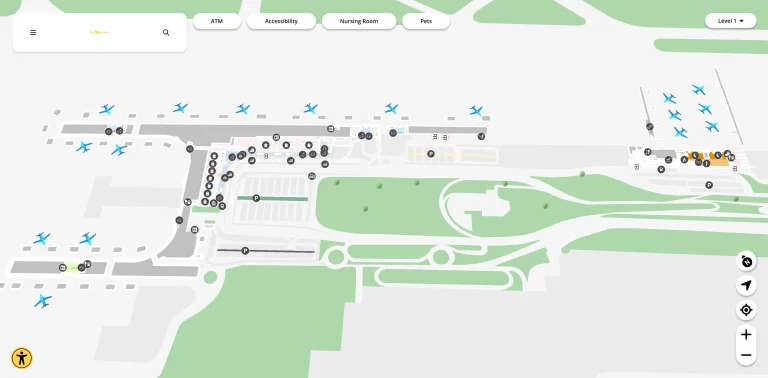
Sheremetyevo International Airport Terminal F Map (Most Up-To-Date)

Sheremetyevo Terminal F is the legacy international building on the south side of the wider Moscow Sheremetyevo hub, physically linked toward Terminal E (and onward to Terminal D) by long connecting galleries with travelators. The layout feels compact and low-ceilinged inside F, then opens into brighter, linear corridors once you reach the F/E boundary. Navigation success hinges on finding the Terminal F transfer diversion before main immigration.
Map Table
| Zone | Connection | Walk Time |
|---|---|---|
| Arrivals flow | Transfer/Transit diversion | 1–3 min from deplane stream |
| Transfer Zone (L2) | Security + transit passport control | queue-dependent |
| F→E gallery | Airside pedestrian walkway, travelators | 7–10 min core transit |
| F landside hall | Public corridor to E/D | 10–20 min to D departures area |
Sheremetyevo International Airport Terminal F Map Strategy
- Treat Terminal F’s transfer-zone split as the first survivability test: follow “Transfer/Transit” before the general border-control queues, because the transfer corridor access depends on clearing the transfer-zone checkpoints first.
- Assume the choke point is inside Terminal F, not in the gallery: budget time for transfer desk validation plus the combined security re-check and transit passport control, then plan a fixed 20-minute walk allowance once you’re in the connector.
- Use corridor “proofs” to reduce time-to-gate uncertainty: travelators and the bright, glassy Terminal E environment confirm you’re on the correct F→E arterial path; the St. Nicholas Chapel node in E confirms the D junction is ahead/adjacent.
- Keep a landside fallback and a comfort micro-map: if you surface landside, take the public F–E–D corridor to Terminal D departures and re-clear formal checks; for long delays near Terminal F, target the quiet F/E transition zone reported near the Victoria’s Secret area rather than the main F seating rows.
2026 Sheremetyevo International Airport Terminal F Map + Printable PDF
Terminal F’s passenger operations remain closed for reconstruction status in 2026, but the building’s transfer logic still matters for legacy “Terminal F” references and for understanding how the south complex is stitched together via Terminal E. If a routing or sign points you to “Transfer/Transit” in the south complex, the practical map-reading skill is recognizing the Terminal F transfer-zone decision point before the main immigration hall.
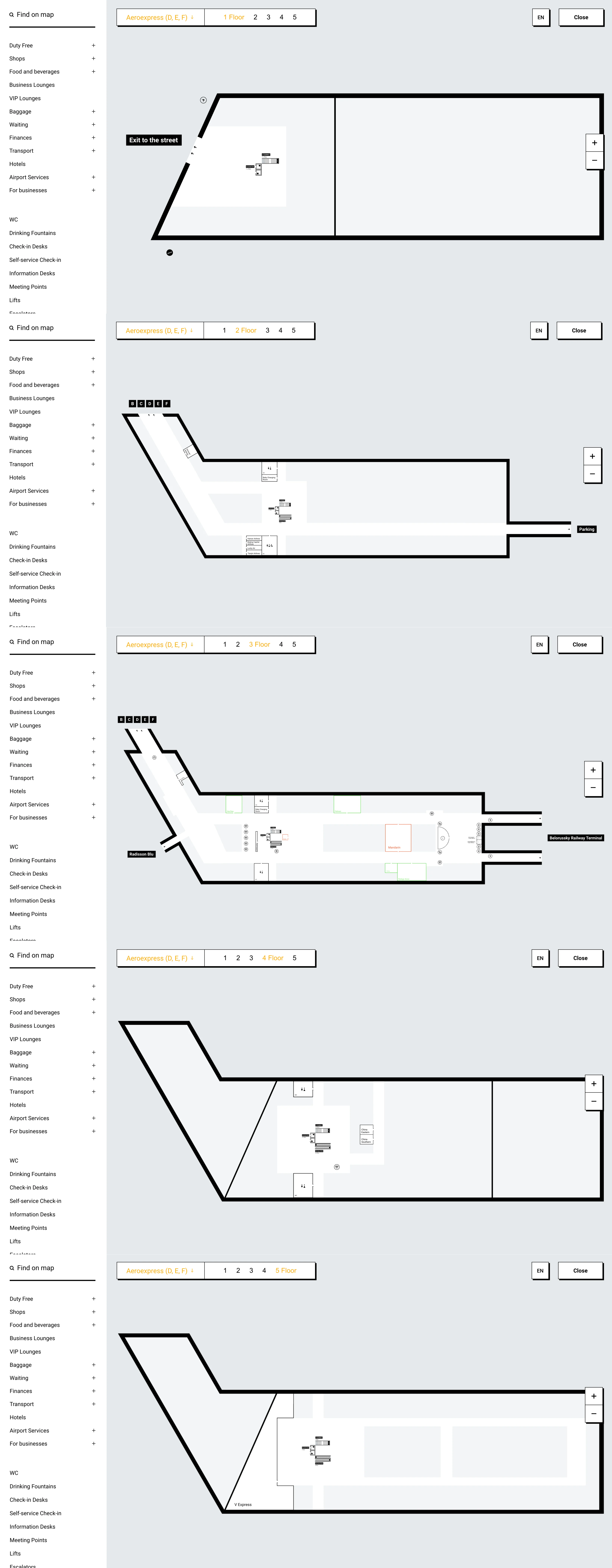
Sheremetyevo International Airport Terminal F Level 1 Map 2026
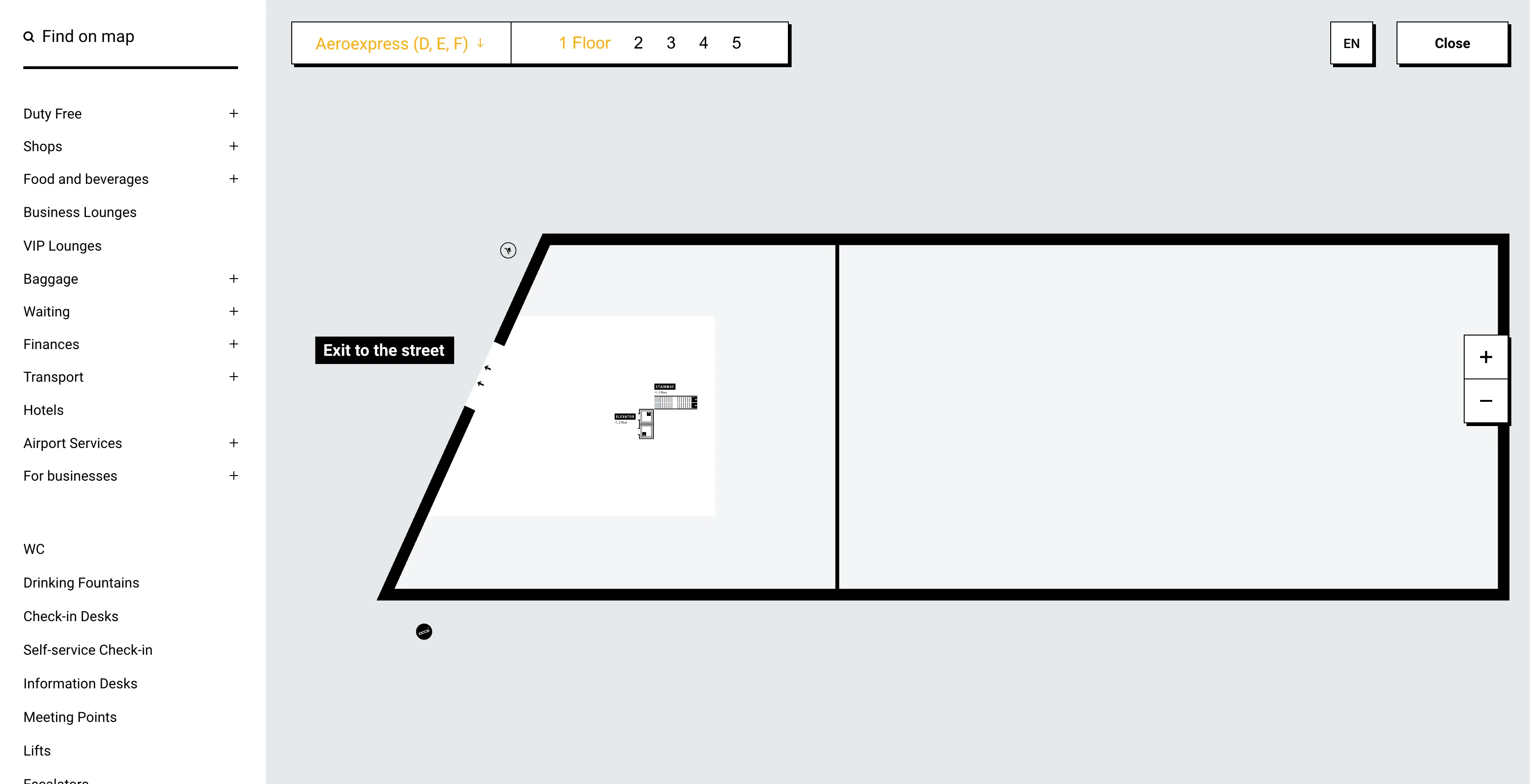
Sheremetyevo International Airport Terminal F Level 2 Map 2026
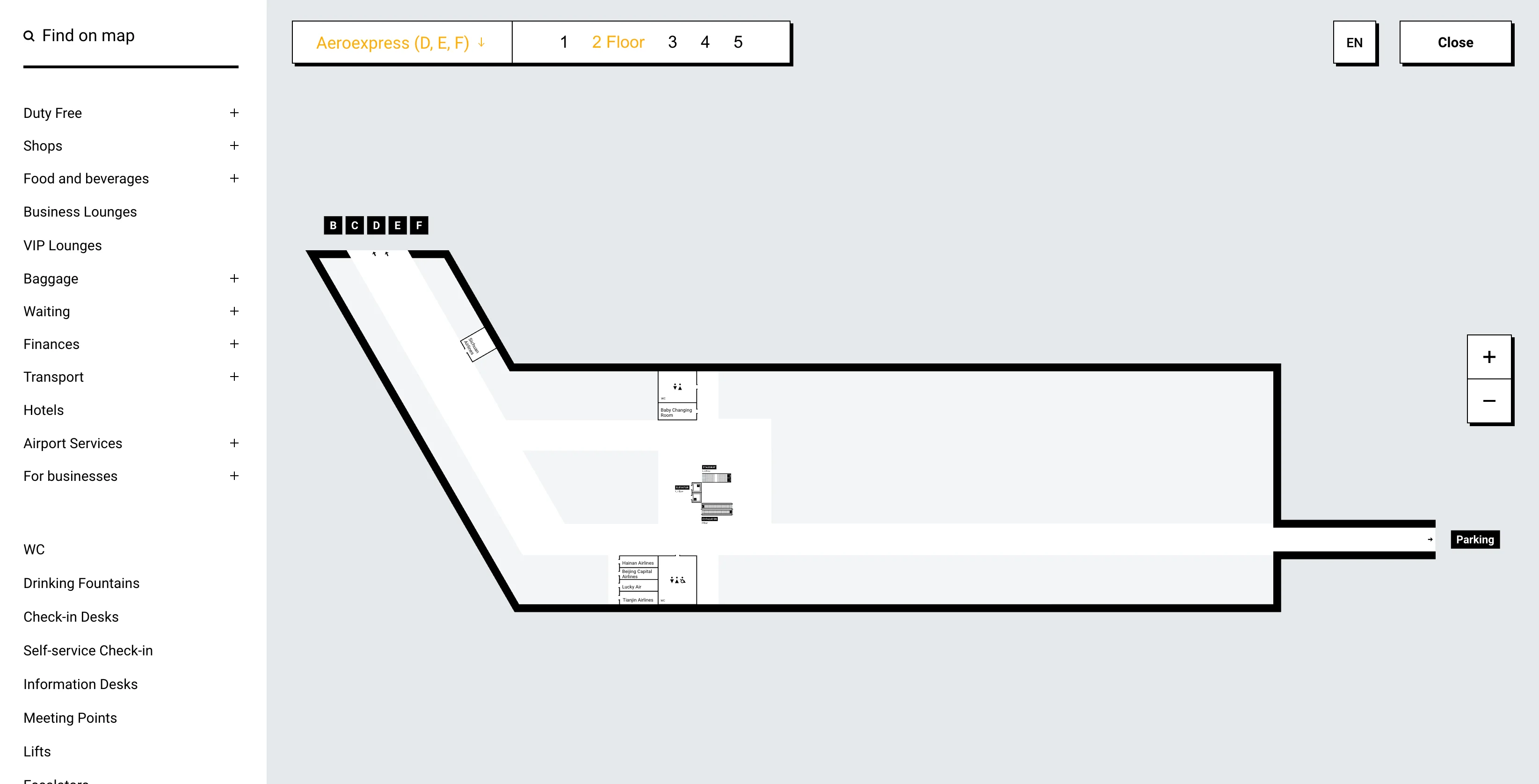
Sheremetyevo International Airport Terminal F Level 3 Map 2026
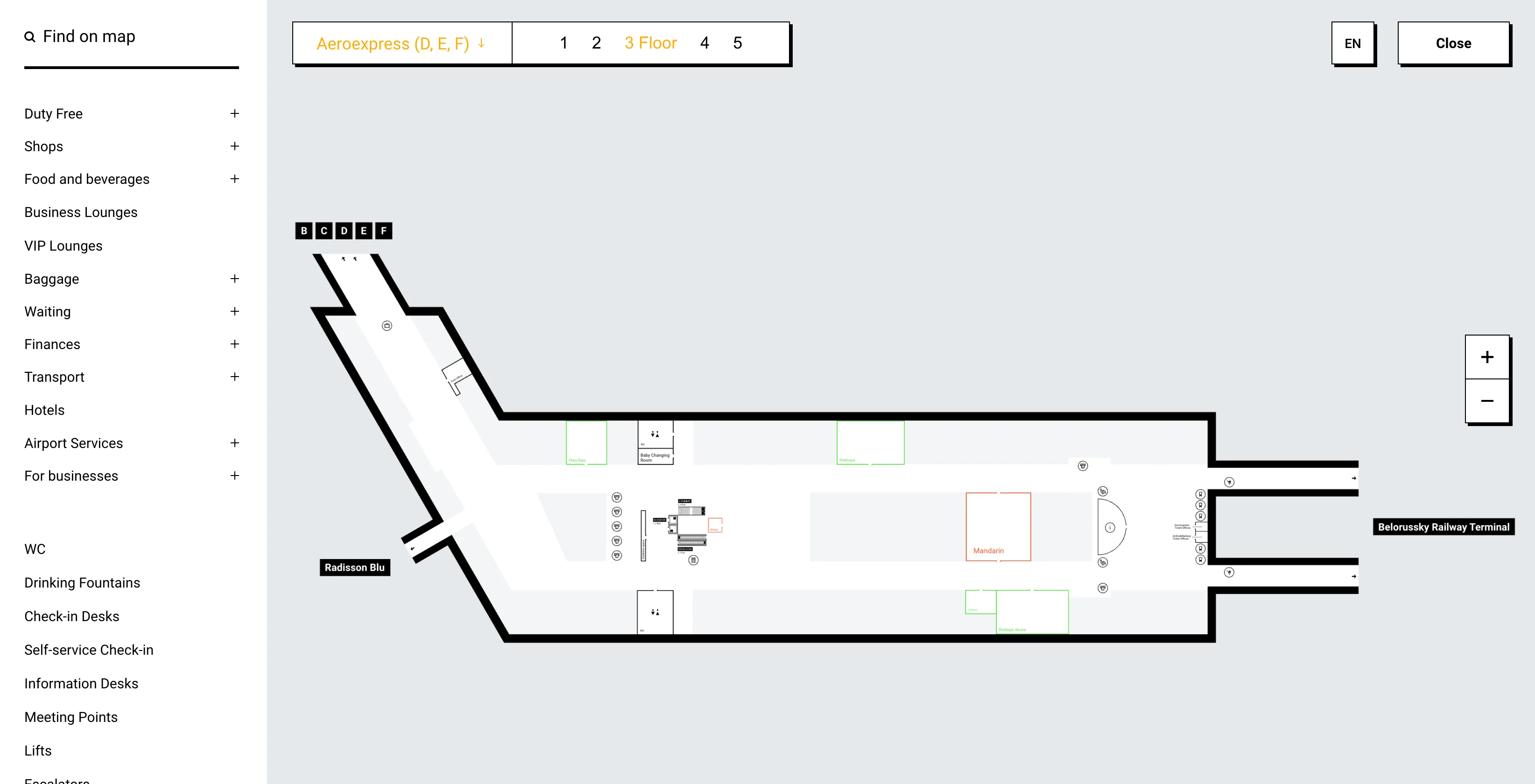
Sheremetyevo International Airport Terminal F Level 4 Map 2026
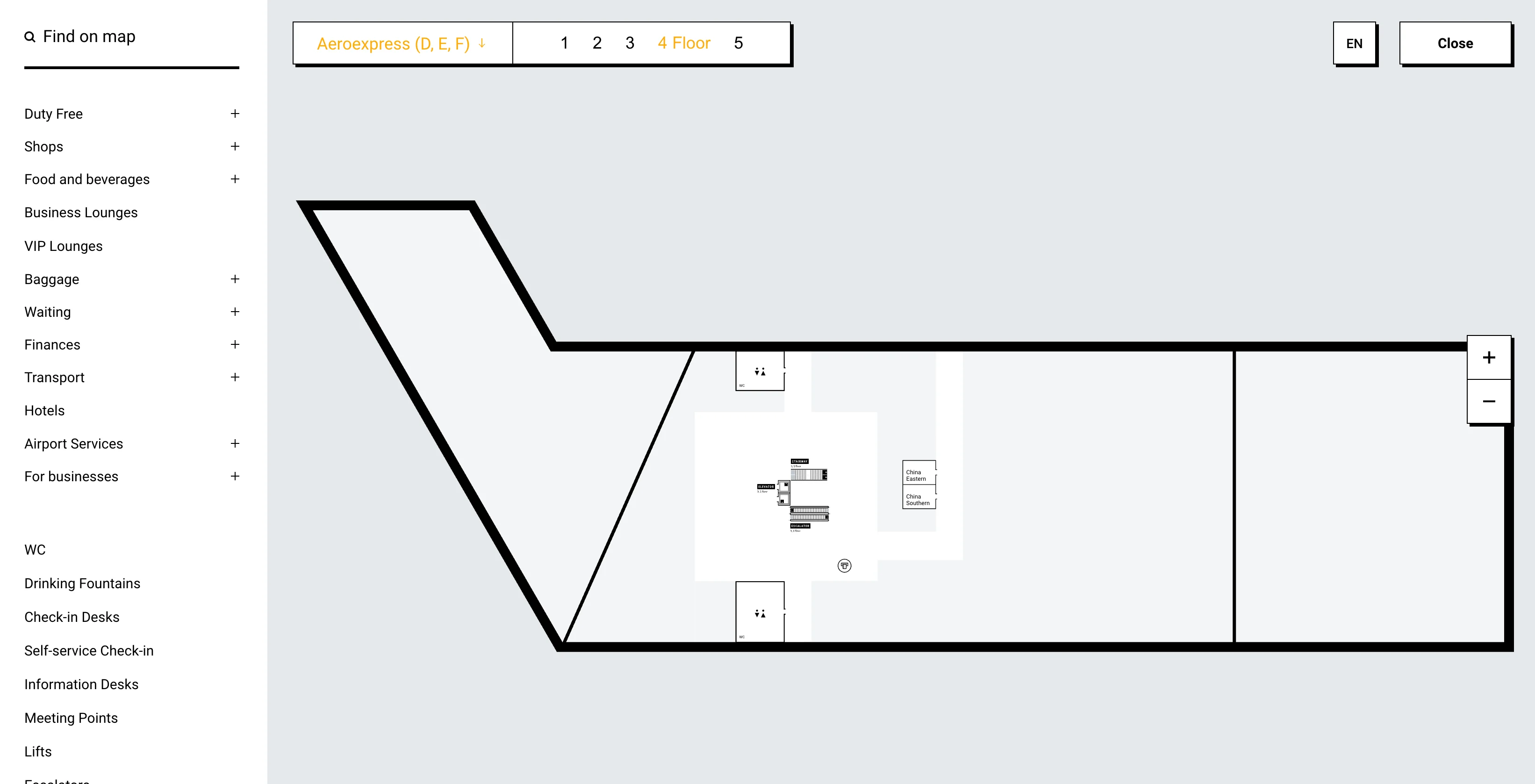
Sheremetyevo International Airport Terminal F Level 5 Map 2026
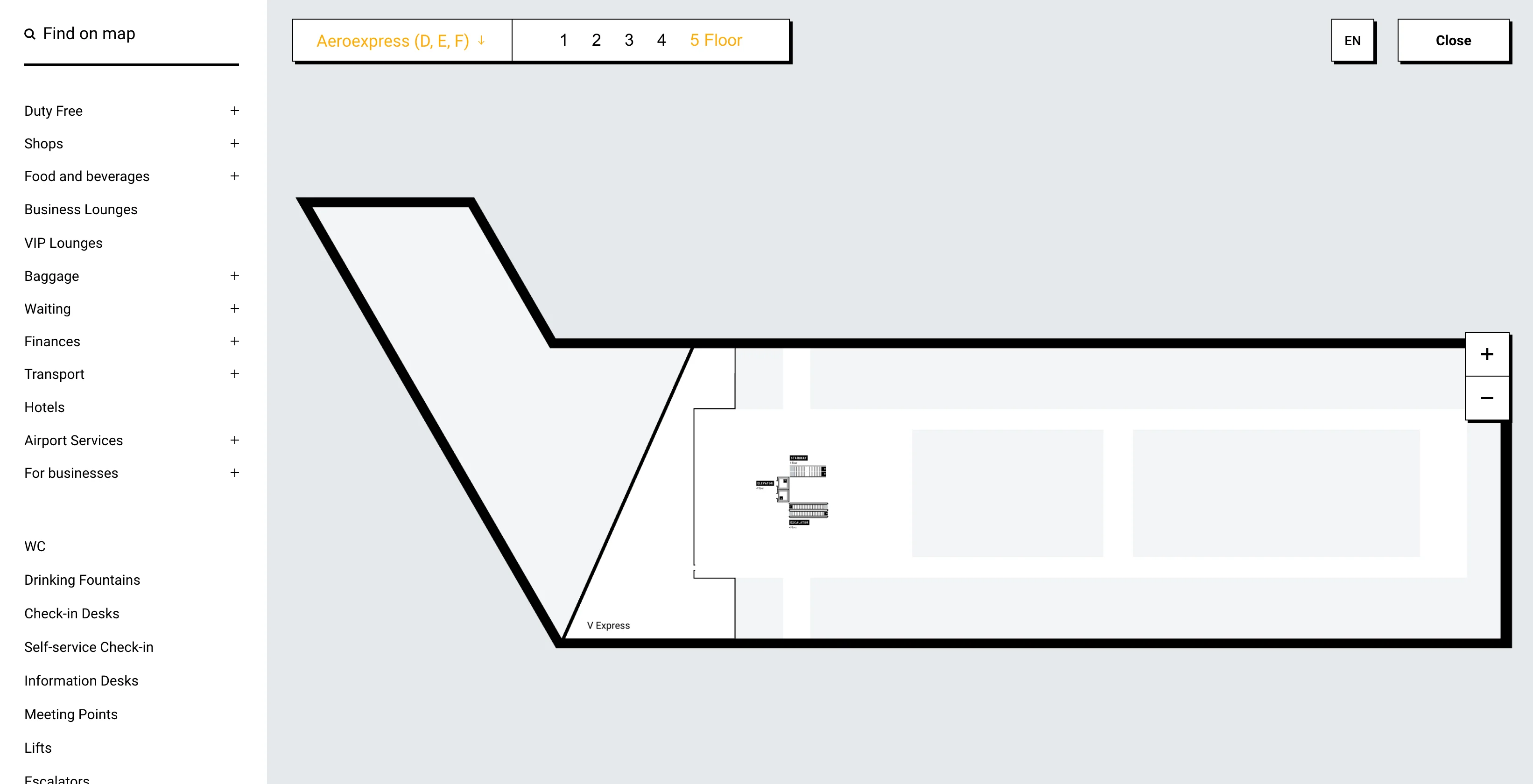
2026 Sheremetyevo International Airport Terminal F Map Guide
What is the exact walking distance (meters) from Terminal F arrivals to the Terminal D departures corridor entrance used for transfers?
The walking distance is about 750–1,000 meters from Terminal F arrivals to the Terminal D departures-side corridor entrance (the D hub/junction point after Terminal E). The variance comes from where you exit arrivals in Terminal F (jetway vs. bus-gate corridors) and which internal path you take to reach the F→E connecting gallery. Once you hit the bright, linear Terminal E spine with travelators, you’re effectively committed to the main transfer arterial that feeds into Terminal D’s central atrium area.
| Segment (landmark-anchored) | Distance |
|---|---|
| Terminal F arrivals flow → F transfer/connector approach | 300–400 m |
| F/E connecting gallery through Terminal E spine (travelators) | 250–300 m |
| Terminal E end → Terminal D central hub/corridor entrance | 200–300 m |
| Total to D corridor entrance | 750–1,000 m |
What is the fastest pedestrian route name/marker (e.g., connecting gallery, signed corridor) that links Terminal F to Terminal D inside the south complex?
The fastest route is the airside “Connecting Gallery” pedestrian walkway (Russian: Peshekhodnaya galereya) that runs Terminal F → Terminal E → Terminal D. The correct corridor is the one with continuous travelators and overhead signs grouping “Terminals D, E, F” (often paired with “Transfer/Transit” guidance when you’re coming from arrivals). The strongest “you’re on-track” visual cue is leaving Terminal F’s darker, low-ceiling interior and entering Terminal E’s brighter, glassier connector spine.
- Follow overhead signs for “Terminals D, E, F” / “Way to Terminal D” at the Terminal F transfer-side exit.
- Stay in the travelator-equipped gallery as it straightens into Terminal E.
- Confirm you’ve reached the distribution point at the Terminal E/Terminal D junction by the St. Nicholas Chapel node.
Where is the border/passport control checkpoint located on the Terminal F to Terminal D international-to-international transfer path (before the corridor, inside it, or after it)?
Passport control sits in Terminal F’s dedicated Transfer Zone before you enter the connecting gallery toward Terminal E and Terminal D. The dealbreaker is missing the Transfer/Transit diversion and walking into the main Russia-entry immigration hall, which breaks the airside loop and can strand non-visa passengers.
After deplaning in Terminal F, follow Transfer/Transit signs to the lateral split that appears before the main immigration queues. The transfer sequence runs past the transfer desk area and then through transit passport control (border check) as the gateway into the sterile corridor. Only after that checkpoint do you access the airside gallery with travelators leading into Terminal E, with the St. Nicholas Chapel node later confirming you’re at the E/D junction.
Where is the security re-check point located on the Terminal F to Terminal D transfer path for connecting passengers?
Security re-check is located in Terminal F’s Transfer Zone, paired with the same pre-gallery checkpoint cluster as transit passport control. The screening happens before you enter the sterile connecting gallery toward Terminal E and Terminal D, so any queue here directly consumes your walking buffer.
From Terminal F arrivals, the transfer path diverts before the main immigration hall into the Transfer/Transit area near the transfer desk zone. Cabin bags and passengers pass through standard X-ray/metal detector screening as part of the transfer processing, then continue to the transit border check and the corridor entry. Once you’re through this node, the route becomes the long travelator corridor into Terminal E, with the St. Nicholas Chapel in E acting as the downstream landmark for the D junction.
What is the exact walk time range (min/max) from the Terminal F transfer desk area to the Terminal D gate-area far end (the longest internal walk in the south complex)?
The walk time ranges from 12 minutes (fast pace, travelators working, light crowds) to 45 minutes (congested corridors, travelators off, and a far-end Terminal D gate). The longest variable is Terminal D’s internal sprawl after you leave the E/D junction and enter the main D atrium.
| Route slice (landmark-anchored) | Min | Max |
|---|---|---|
| Terminal F transfer-zone exit → F/E gallery → across Terminal E | 7 min | 15 min |
| Terminal E/D junction (by St. Nicholas Chapel) → Terminal D central hub | 5 min | 10 min |
| Terminal D hub → far-end gate area (“Swan” wing / remote end) | 0 min | 20 min |
| Total (F transfer area → far-end D gates) | 12 min | 45 min |
What is the exact physical location (level + nearest landmark/gate zone) of the international transfer counter / transit desk serving Terminal F connections?
The international transfer counter sits on Level 2 of Terminal F in the Transfer/Transit diversion area before the main immigration hall. It’s positioned as a lateral peel-off from the arrivals stream, just ahead of the transit passport-control booths and the integrated re-screening point.
Arriving passengers typically reach the decision node at the top of the escalators that feed toward the immigration hall below. At that split, Transfer/Transit signage sends you sideways into the Level 2 transfer pocket instead of forward/down into the general border-control queues. Use the nearby “Transfer/Transit” overhead boards as the landmark, then look for the clustered desks directly upstream of the transit document check lanes.
If a traveler accidentally exits to a landside/common area in Terminal F, where is the closest re-entry point to regain the airside transfer corridor to Terminal D?
The closest re-entry is the main Departures security/passport control entry point in the south complex, reached by going to Terminal F Departures (Level 2) or walking the landside public corridor from Terminal F to Terminal D and re-clearing in Terminal D. The dealbreaker is that this fallback only works if the traveler is legally landside (valid Russian visa or exemption).
Once you clear Russia-entry immigration in Terminal F, you cannot simply walk back into the sterile transfer gallery. The practical recovery route is to follow landside wayfinding to the public pedestrian corridor that parallels the airside gallery (F–E–D), then enter departures processing like a normal origin passenger. Use the Terminal E Aeroexpress-side public spine as the landmark mid-way, then continue to Terminal D departures to re-clear controls and reach the D gate areas.
Where are the clearest signed junctions (exact nodes/turn points) where travelers commonly choose the wrong direction when walking between Terminal D and Terminal F?
The most common wrong-turn nodes are the Terminal F/E boundary retail transition and the Terminal E/D junction by the St. Nicholas Chapel. Both spots look like “exits” or mode-changes, so travelers peel off toward shops, Aeroexpress, or the wrong escalator bank instead of staying on the terminal-to-terminal corridor.
- Terminal F → Terminal E boundary where duty-free/retail appears and the space brightens; stay on the travelator corridor that continues past the shops toward “Terminals D, E, F.”
- Terminal E/D junction at Level 2 by the St. Nicholas Chapel; follow “Terminal D” signs and avoid escalators that drop you toward Aeroexpress/landside.
- Terminal D main atrium entry where levels split (Arrivals vs. Departures); use gate-number direction boards to commit to the correct concourse wing before you start the long walk.
Where is the best armrest-free seating / sleep corner zone in Terminal F airside, by gate/area, for travelers stuck on a long delay?
The best practical “sleep corner” is the quiet transition zone near the Terminal F/E connector area reported around the Victoria’s Secret shop pocket, rather than the main Terminal F gate halls. Terminal F’s core seating is typically armrest-heavy, so the highest-odds option is finding low-traffic corners near the connector boundary.
Use the F/E boundary as your triangulation point: aim for the corridor segment that feels like “between terminals” (brighter, more open, near retail), then look for warm, quieter edges away from the central footpath. If that zone is busy or monitored, the next-best fallback is migrating forward into Terminal D’s Gate 40 area (Burger King zone) for padded bench options once the venue quiets down.
Where is the inter-terminal train/underground passage access point that connects the south complex (D/E/F) to the north complex (B/C), and which Terminal F-adjacent entrance is closest?
The inter-terminal train access point is in the passage between Terminals D and E at the “Sheremetyevo 2” station entrance. The closest Terminal F-adjacent approach is walking from Terminal F into Terminal E via the connecting gallery, then continuing straight through Terminal E to the D/E junction.
The key confirmation landmark is the Terminal E Level 2 junction by the St. Nicholas Chapel, where signage for the inter-terminal passage/train to Terminals B and C clusters near the D/E passage. From Terminal F, stay on the travelator-equipped F→E gallery until you’re fully in Terminal E’s bright connector spine, then keep moving toward the E/D split rather than peeling off toward Aeroexpress exits. The train runs frequently (about every 7 minutes) and takes about 4 minutes once boarded.