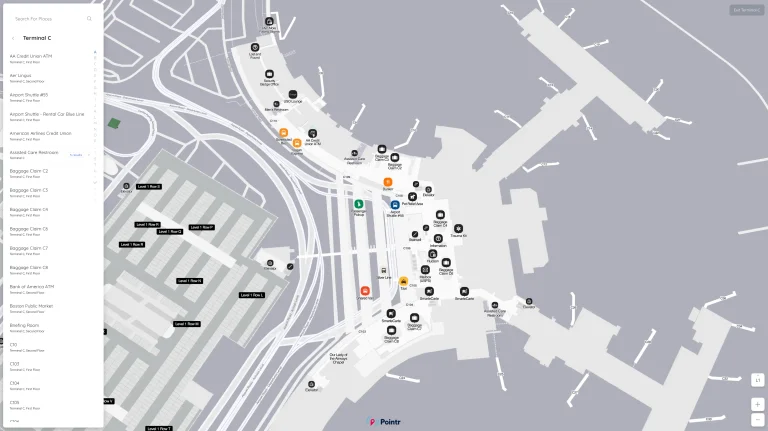
Warsaw Chopin Airport Map (Most Up-To-Date)

Warsaw Chopin is a compact, single-terminal airport built around a central landside hall that feeds one main airside concourse, then splits into Schengen and Non-Schengen gate areas at a passport-control boundary. Walking distances are generally short, but connection time can swing sharply when security and border checks stack. The key is understanding where the Schengen/non-Schengen fork sits inside Warsaw’s primary aviation hub and reaching the correct corridor before queues build.
Map Table
| Terminal | Key Airlines | Primary Function | Transfer Mode |
|---|---|---|---|
| Terminal A (main) | LOT Polish Airlines, Star Alliance partners | Schengen + Non-Schengen departures/arrivals | Airside walk, short corridors |
| Schengen gates | European intra-Schengen network | No exit passport control | Airside walk |
| Non-Schengen gates | UK, long-haul, non-Schengen Europe | Exit passport control interface | Airside walk, border checkpoint |
| Remote stand gates | Mixed short-haul peaks | Bus boarding / bus arrivals | Bus + short walk |
Warsaw Chopin Airport Map Strategy
- Assume time loss comes from stacked queues: clear the first screening point, then keep moving until you’ve visually confirmed whether passport control is required for your gate area.
- Avoid the high-risk corridor mistake: at the Schengen/non-Schengen split, choose the transfer path that matches your destination zone; the wrong corridor can force an unnecessary passport-control loop.
- Treat bus gates as a buffer killer: after bus arrivals or when boarding via remote stands, move directly to the first overhead “Connections/Transfer” sign before stopping.
- Locate Fast Track under stress: at the main security entrance, scan for the dedicated Fast Track channel before joining any stanchioned queue so you don’t waste minutes in the wrong line.
2026 Warsaw Chopin Airport Map + Printable PDF
Current operations at 2026 still reward “decision-point navigation” over raw walking speed: the biggest time losses come from stacked queues (security plus any re-check) and the Schengen→Non-Schengen border interface when it’s busy. If your flight uses bus gates, treat your usable connection time as shorter and prioritize getting to the correct transfer corridor first.
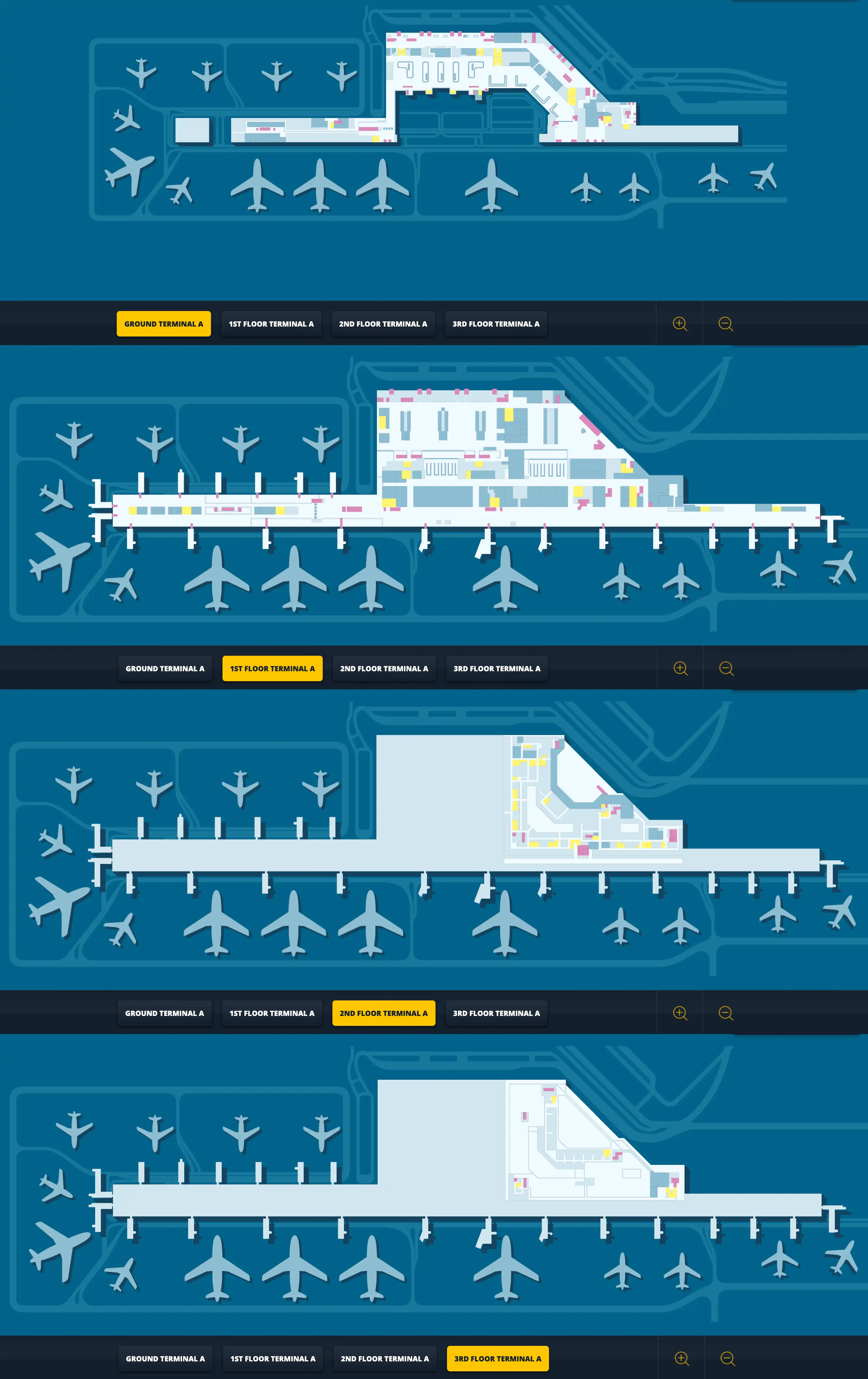
Warsaw Chopin Airport Ground Terminal A Map 2025
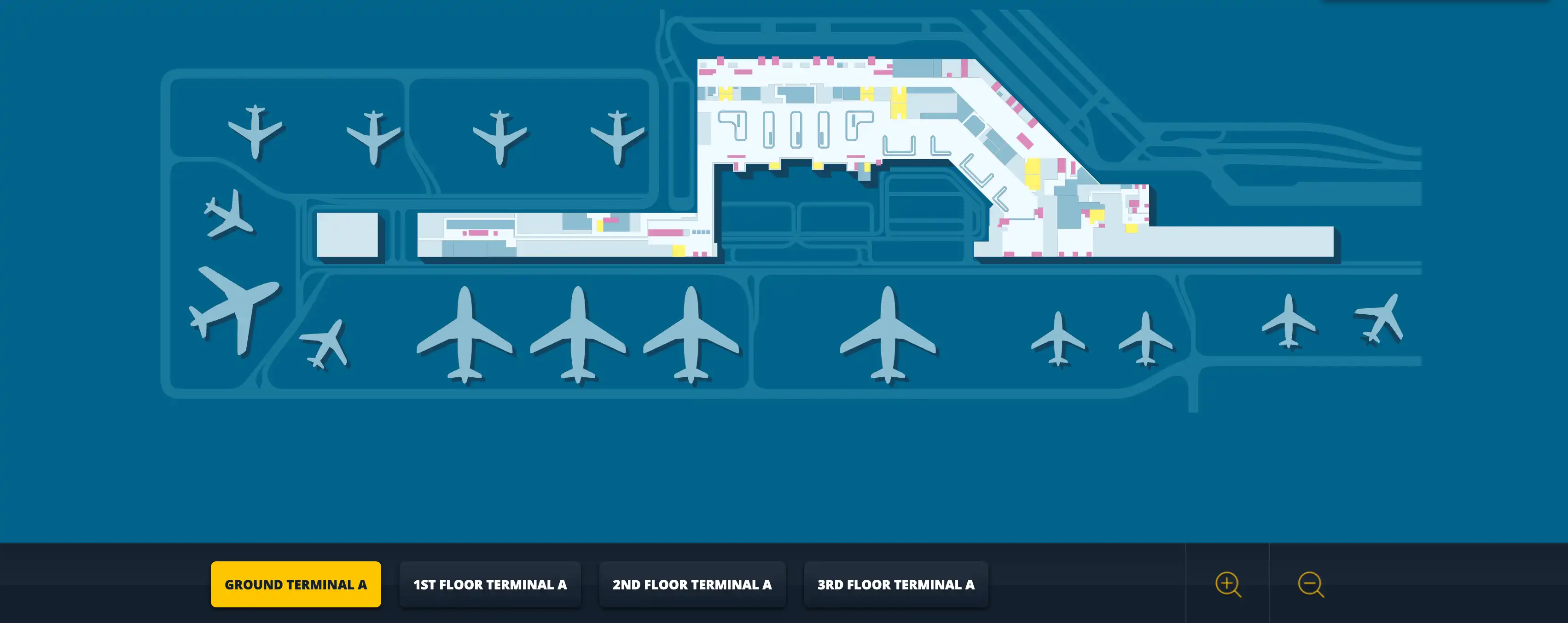
Warsaw Chopin Airport First Floor Terminal A Map 2025
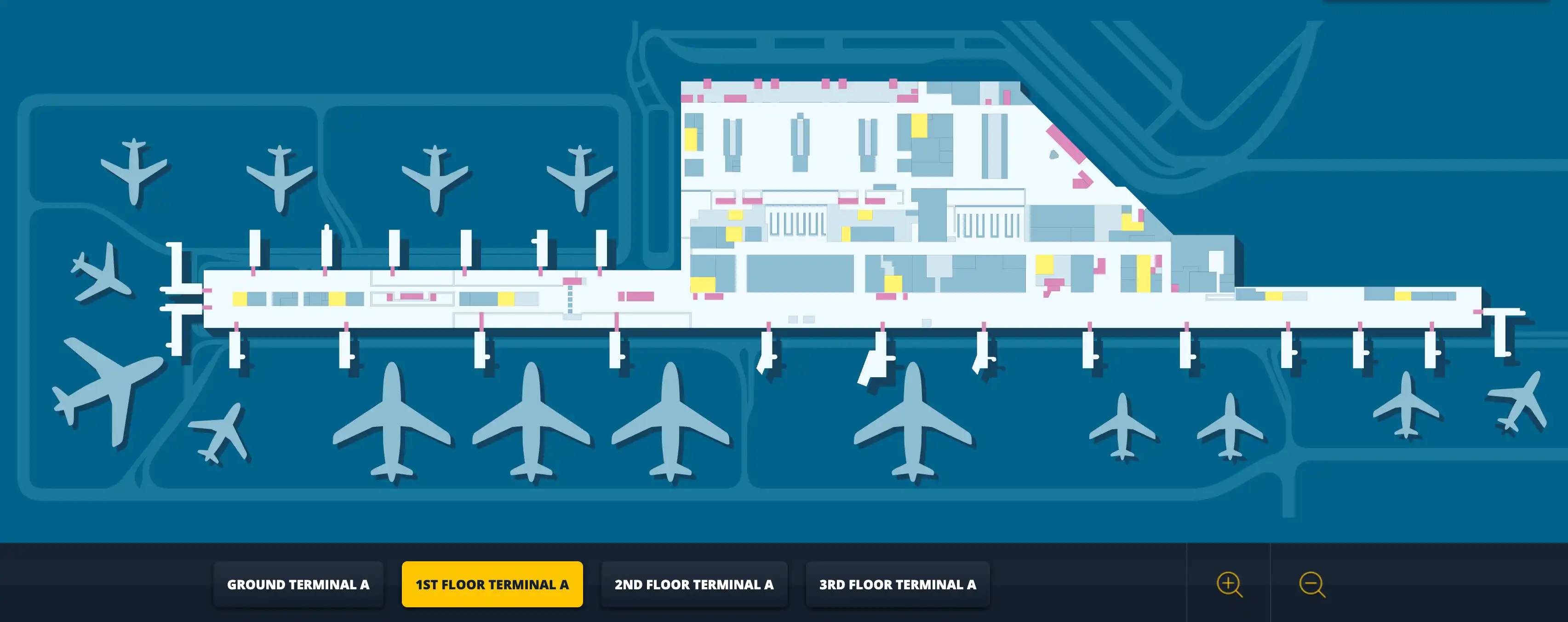
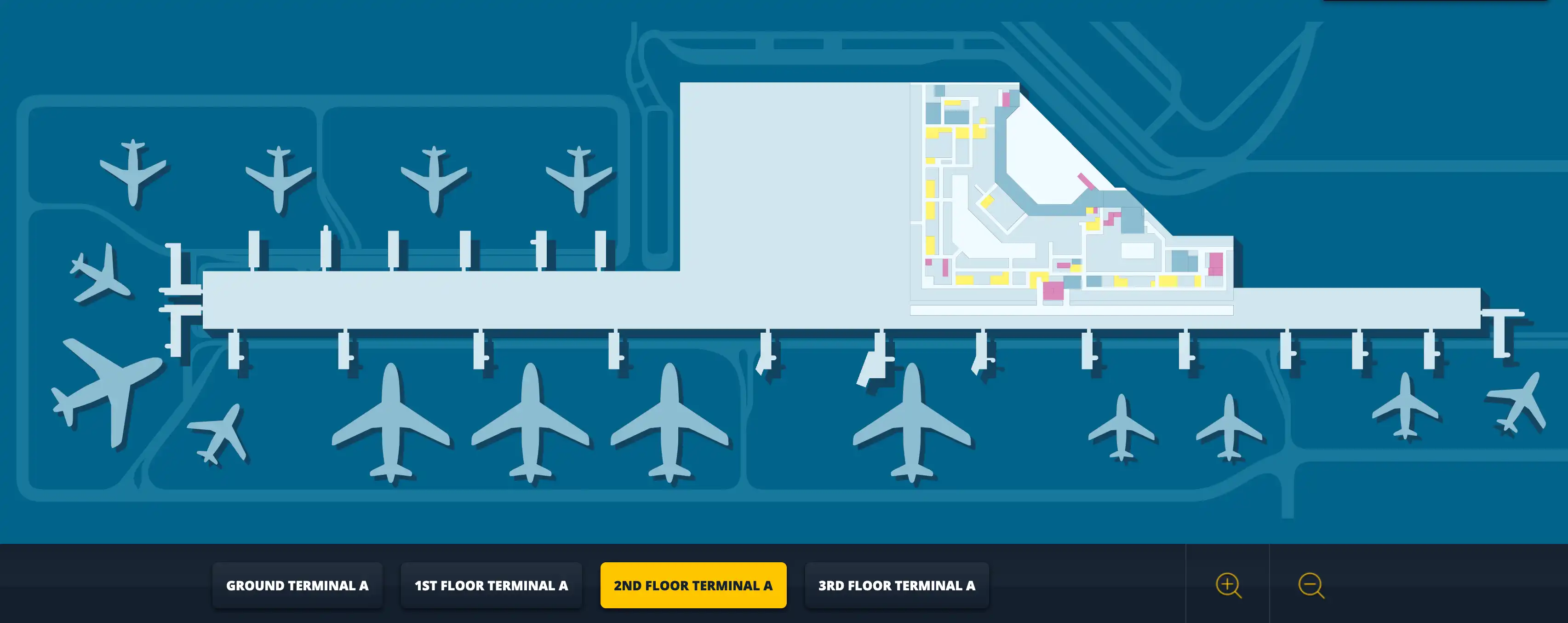
Warsaw Chopin Airport Second Floor Terminal A Map 2025
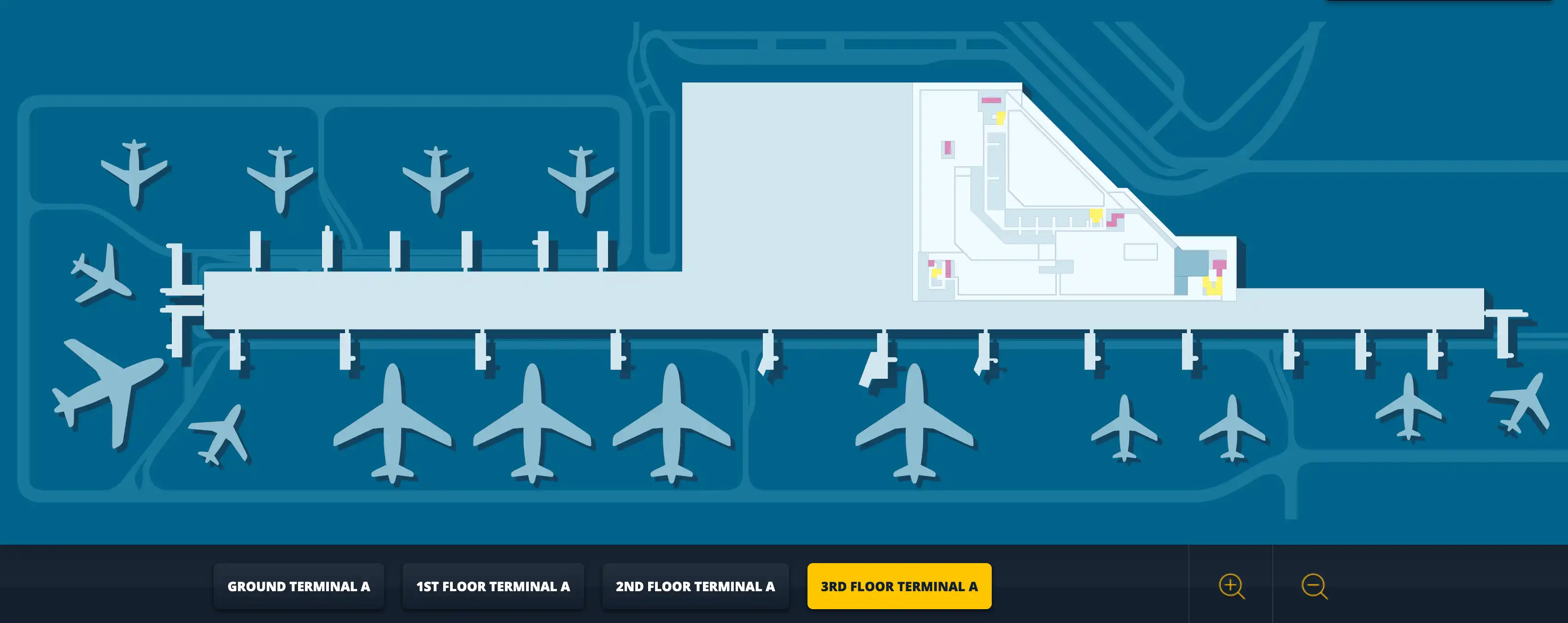
Warsaw Chopin Airport Third Floor Terminal A Map 2025
2026 Warsaw Chopin Airport Map Guide
What is the exact walking distance (meters) from the main Departures security exit to the Non-Schengen passport control entry used for long-haul departures?
The walking distance is about 180 meters from the main Departures security exit to the Non-Schengen passport-control entry at Warsaw Chopin (WAW). That span is short in pure distance, but it can feel longer when the corridor compresses near the border-control frontage and queues spill back toward the post-security retail edge.
| Segment (landmark-to-landmark) | Distance | Walk time |
|---|---|---|
| Security exit → main post-security concourse edge (retail frontage) | ~70 m | 1 min |
| Concourse edge → “Passport Control / Non-Schengen” corridor mouth | ~60 m | 1 min |
| Corridor mouth → first passport-control queue entry point | ~50 m | 1 min |
Where is the Non-Schengen Transfer corridor located relative to typical arrival flow from bus gates, so a passenger can avoid accidentally entering passport control?
The Non-Schengen Transfer corridor is the “Connecting Flights/Transfer” channel that branches off before the main Arrivals stream reaches the public exit and before the landside border desks. From a typical bus-gate arrival, the first reliable anchor is the initial indoor junction where most passengers drift toward Arrivals and baggage reclaim; the transfer corridor is the signed split that peels away toward the escalator/elevator bank up to departures and the transfer security re-check. Keep to the transfer-signed side at that first junction and stay with overhead “Transfer/Connecting” signs until you’re back in the airside departures flow, rather than following “Arrivals/Exit” signs that pull you toward passport control.
What is the exact walking time (minutes) from the Non-Schengen Transfer security re-check point to the furthest “N-gates” cluster?
Walking takes about 10 minutes from the Non-Schengen transfer security re-check exit to the furthest non-Schengen gate cluster at Warsaw Chopin (WAW), excluding any passport-control queue. That walk is mostly straight-line concourse movement, with the only real slowdown risk at the Schengen/non-Schengen split where passenger flow compresses near the border-control frontage.
| Route segment (anchor-to-anchor) | Walk time |
|---|---|
| Transfer security re-check exit → main departures concourse | 2 min |
| Main concourse → “Passport Control / Non-Schengen” corridor | 2–3 min |
| Passport-control exit frontage → start of non-Schengen pier | 2 min |
| Non-Schengen pier start → furthest gate cluster | 3–4 min |
Where is the paid Fast Track security lane entrance (landmark + side of hall), measured as walking distance from the main check-in hall centerline?
The paid Fast Track entrance is on the right-hand side of the main security frontage when you’re facing the security lanes from the center of the check-in hall. It sits beside the premium/priority check-in side of the landside hall and is separated from the general stanchions by its own short document-scan channel.
| Reference point (anchor) | Direction | Walking distance |
|---|---|---|
| Check-in hall centerline (main hall midpoint facing security) | Right | ~45 m |
| LOT/Priority check-in frontage edge | Toward security | ~20 m |
| General security queue head (main stanchion entry) | Right of it | ~10 m |
From the typical bus drop-off door into the terminal, what is the shortest mapped route to the connections/transfer signage (first decision sign)?
The shortest route is about 90 meters to the first overhead “Transfer/Connecting Flights” sign from the usual bus drop-off entry door. That first decision sign appears at the initial indoor junction where the main flow bends toward Arrivals/baggage reclaim and the transfer channel peels off toward the vertical cores back to departures.
| Step (anchor-to-anchor) | Distance | Walk time |
|---|---|---|
| Bus drop-off entry door → end of the covered arrival corridor | ~35 m | 1 min |
| Corridor end → first indoor junction (Arrivals flow split) | ~40 m | 1 min |
| Junction → first overhead “Transfer/Connecting Flights” sign span | ~15 m | <1 min |
What is the distance (meters) between the Schengen gate area split-point and the first passport-control queue for Schengen→non-Schengen transitions?
The distance is about 60 meters between the Schengen split-point and the first passport-control queue entry at Warsaw Chopin (WAW). The split-point is the spot where overhead signs begin separating “Schengen” gates from “Non-Schengen/Passport Control,” typically just past the main post-security concourse throat. If you can already see the passport-control booth frontage ahead, you’re within the last half-minute of walking.
| Anchor-to-anchor segment | Distance | Walk time |
|---|---|---|
| Schengen/non-Schengen overhead sign split-point → corridor mouth for “Passport Control / Non-Schengen” | ~35 m | 0.5 min |
| Corridor mouth → first queue stanchions/queue entry line | ~25 m | 0.5 min |
Where are the secondary screening desks (hand-swab / extra check) positioned relative to the main security exit, and what is the bypass-free funnel path a passenger must follow?
Secondary screening desks sit immediately after the main security exit, beside the re-pack tables and before the concourse fully opens into the main airside corridor. The setup is designed so you can’t “slip around” it once you’re selected—your only path is forward through the controlled pinch point.
After you step out of the X-ray lanes, you enter the re-pack zone (benches, tray return, and people re-buckling belts). If staff flag your bag or you’re pulled for a swab, you’re directed into a short, roped side lane that runs parallel to the exit flow and ends at the inspection desk(s). The funnel then returns you to the same main airside corridor; you rejoin traffic only after the swab/hand-check is cleared.
What is the closest quiet seating zone inside the non-Schengen area (post-passport) to the N-gates, measured by walking minutes from the central duty-free boundary?
The closest quiet seating zone is typically the first seating pocket just past Exit Passport Control on the non-Schengen side, before the concourse tightens into the far-gate pier. Walking takes about 6 minutes from the central duty-free boundary to reach it, assuming you don’t stop in the main retail pinch.
From the duty-free boundary, follow overhead “Non-Schengen / Passport Control” signs to the border desks, then continue straight after the passport-control exit. The quieter seats are usually along the side wall within the first stretch of the non-Schengen concourse, away from the immediate booth frontage where crowds bunch. If that area is full, the next-best quiet option is farther down the non-Schengen corridor toward the last gates, where foot traffic thins but services also drop off.
Where is the closest lounge entrance that can be accessed airside near the non-schengen zone, and what is the walking distance from the N-gates corridor?
The closest lounge entrance is typically positioned immediately after Exit Passport Control on the non-Schengen side, reached before the concourse stretches out toward the farthest non-Schengen gates. That placement makes it the safest “wait spot” once you’ve cleared the border step, with a short, predictable walk back to the main N-gates corridor.
| Landmark-to-landmark route | Walking distance | Walking time |
|---|---|---|
| N-gates main corridor (post-passport) → passport-control exit frontage (backtrack) | ~120 m | 2 min |
| Passport-control exit frontage → lounge entrance (adjacent mezzanine/stair/lift bank) | ~60 m | 1 min |
| Furthest non-Schengen gate cluster → lounge entrance (via main corridor) | ~450–650 m | 7–10 min |
What is the exact location of the first “wrong-turn” risk point (map-verified fork) where a non-schengen→non-schengen transfer passenger could mistakenly enter passport control, and how far is it from the arrival corridor?
Entering passport control at the first Arrivals split is the highest-risk mistake because it commits you into a border-control queue you didn’t need, burning connection time fast. The first wrong-turn point is the initial indoor junction after the arrivals corridor opens up, where “Arrivals/Exit/Baggage” flow pulls one way and “Transfer/Connecting Flights” peels off toward vertical transport back to departures.
| Fork location (anchor) | How to spot it fast | Distance from arrival corridor end |
|---|---|---|
| First indoor junction after bus/arrivals corridor | Overhead signs split; “Arrivals/Exit/Baggage” dominates straight/ahead; “Transfer/Connecting Flights” (often purple-coded) angles off toward escalator/elevator bank | ~25 m |
| Entry pull toward passport control path | Crowd density increases; signage shifts toward arrivals processing/controls; fewer “Transfer” icons visible | ~35–45 m |
What is the shortest mapped route from Arrivals (landside) back up to Departures security (including the correct escalator/elevator bank), measured in walking minutes?
Walking takes about 9 minutes from landside Arrivals back up to Departures security at Warsaw Chopin (WAW) if you use the central escalator/elevator bank in the main terminal hall. The fastest path stays inside the main public hall and avoids detouring into curbside drop-off lanes or side corridors.
| Step (anchor-to-anchor) | Route instruction | Walk time |
|---|---|---|
| Arrivals exit doors → main public Arrivals hall midpoint | Move to the open hall center (meeting-area feel, widest sightlines) | 2 min |
| Arrivals hall midpoint → central escalator/elevator bank | Follow overhead “Departures / Check-in” signs to the main vertical core (not the side stairwells) | 2 min |
| Up one level via escalator/elevator | Arrive into the Departures/check-in level | 1 min |
| Escalator landing → check-in hall centerline facing security | Walk straight into the main hall, aiming for the densest check-in island area | 2 min |
| Check-in hall centerline → main security entrance | Follow “Security Control / Gates” signage to the screening frontage | 2 min |
Where is the bottleneck choke-point immediately before passport control (map-verified narrowing/merge), and what is its distance from the security exit?
The bottleneck choke-point is the corridor throat where the main post-security concourse narrows and passenger streams merge under the first “Passport Control / Non-Schengen” overhead signs, just before the queue stanchions begin. That pinch point is where walkers coming out of retail frontage and through-traffic to gates compress into a single approach lane.
| Anchor-to-anchor segment | Distance |
|---|---|
| Main security exit → start of the concourse narrowing (pre-border throat) | ~140 m |
| Concourse narrowing → first passport-control queue stanchions | ~30 m |
| Main security exit → first passport-control queue stanchions (total) | ~170 m |