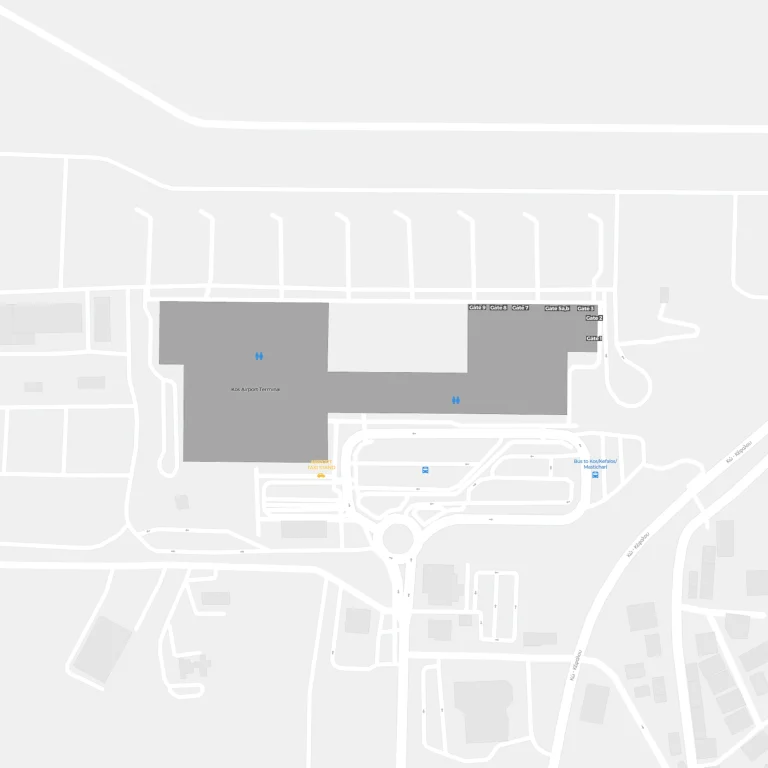
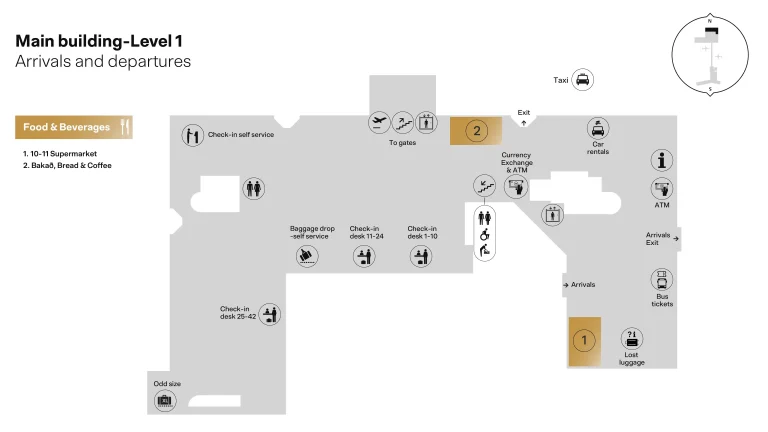
Philadelphia International Airport Map (2025-2024)

Philadelphia International Airport is a long, mostly linear terminal spine (A-West through E) running along the curb-roadway on one side and the airfield on the other, with Terminal F set apart like an “island” to the east. Inside Philadelphia’s main airport hub, most navigation is end-to-end through connected airside corridors, while the F ↔ A-West movement hinges on either the E–F bridge walk or the airside shuttle nodes (F10, A1, C16).
Map Table
| Terminal | Key Airlines | Primary Function | Transfer Mode |
|---|---|---|---|
| Terminal A-West | American (long-haul), BA, Lufthansa, Qatar | International, widebody gates | airside corridor, long walk to A1 shuttle |
| Terminal A-East | American | Domestic, feeder to connectors | airside corridor, shuttle at A1, re-screen return point |
| Terminal B | American | Domestic hub, Marketplace access | airside corridor, moving walkways to C |
| Terminal C | American | Domestic gates, central flow | airside corridor, shuttle at C16, walk to B/C claim |
| Terminal D | Multiple carriers | Domestic gates | airside corridor to C/E |
| Terminal E | Multiple carriers | Domestic gates, F connector | airside bridge to F at E1 |
| Terminal F | Regional carriers | Commuter/regional “island” | airside bridge to E, shuttle at F10 |
Philadelphia International Airport Map Strategy
- Treat Terminal F ↔ A-West as a two-choice problem: go straight to Gate F10 (Terminal F Food Hub) for the shuttle, or start the airside bridge walk immediately via the E–F connector at E1.
- Anchor every shuttle plan to the exact stop nodes: F10 (Terminal F), A1 (A-East/B connector), C16 (Terminal C). If you aren’t at the node, you aren’t “on the shuttle route.”
- De-risk rideshare by navigating to the correct ground target first: Zone 7 on South Commercial Road, reached from the baggage-claim exits by the marked crosswalks across Arrivals Road (no “Terminal A curb pickup”).
- Remove TSA hunting time by using the vertical rule: check-in on Level 1, then go up to Level 2 screening (A-West near Special Services/mobility tagging area; Terminal B from the central escalator bank).
2026 Philadelphia International Airport Map + Printable PDF
PHL’s current navigation “gotchas” stay consistent in 2026: Terminal F transfers hinge on finding the active shuttle node (Gate F10) versus committing to the airside walk, and rideshare is centralized away from the terminal doors at Zone 7. The split-level pattern also matters—ticketing is lower, screening is typically upstairs—so your map plan should start with the correct level, node, and corridor.

2026 Philadelphia International Airport Map Guide
Where is the airside shuttle bus stop in Terminal F (exact gate/landmark location)?
The airside shuttle bus stop in Terminal F is at Gate F10, anchored to the Terminal F Food Hub in the central atrium/rotunda. This is the active load zone for shuttle traffic leaving Terminal F, and it functions as the terminal’s main distribution node from all three concourse fingers.
Follow the main flow toward the central rotunda seating/food area, then key on the Gate F10 signage rather than older references to Gate F14. Being at F10 matters because a wrong-gate detour adds backtracking time before you even enter the shuttle queue, and Terminal F’s gate ends can feel deceptively far from the rotunda when you’re coming from the higher-number gates.
What is the exact walking distance from the furthest Terminal F gate to the furthest Terminal A-West gate using the shortest airside path?
The walking distance from Terminal F’s furthest gate (F39) to Terminal A-West’s furthest gate (A26) is over 1.0 mile via the shortest airside path. This route stays entirely airside through the continuous connector chain, but it is a long, multi-terminal traverse rather than a single straight corridor.
| Segment order (airside) | Connector landmark chain | What makes it feel long |
|---|---|---|
| 1 | F → E bridge | “Island” separation from the A–E spine |
| 2 | E → D connector | quiet stretch, easy to doubt you’re right |
| 3 | D → C walkway | steady distance with few shortcuts |
| 4 | B/C Marketplace | crowd friction + retail bottlenecks |
| 5 | A/B connector → A-West | final feeder walk to the far A-West gates |
Where is the official Uber/Lyft pickup zone for Terminal A (exact curb/door/zone on the map)?
The official Uber/Lyft pickup for Terminal A is Zone 7 on South Commercial Road, on the outer roadway island across Arrivals Road. There is no dedicated “Terminal A curb” rideshare pickup; app-based rides consolidate at Zone 7 for the terminal complex.
From Terminal A baggage claim exits, orient to the curb that faces Arrivals Road, then use the marked crosswalks to cross the inner lanes to the outer island. The correct endpoint is the Zone 7 curb line with “Ride App / Zone 7” overhead/posted wayfinding, not the immediate terminal-side curb where taxis and private pickups circulate.
What is the exact walking distance from Terminal A baggage claim exit to the Terminal A Uber/Lyft pickup zone?
The walking distance from the Terminal A baggage claim exit to the Uber/Lyft pickup point is about 150–200 feet to Zone 7. The distance is short, but it includes a required roadway crossing that makes it feel longer when you’re tired or hauling bags.
From the baggage claim doors, walk to the curb at Arrivals Road, then use the signed crosswalk to reach the outer island on South Commercial Road. The destination is the Zone 7 “Ride App” curb area, so the walk ends when you step onto the island-side curb line, not when you reach the first curb outside the terminal doors.
What is the exact walking distance from a typical arrival gate in Terminal C to the Terminal C baggage claim carousels via the shortest public path?
The walking distance from a typical Terminal C arrival gate to the baggage claim carousels is about 600–800 feet via the shortest public path. Terminal C flows to the shared B/C baggage claim hall, so the walk includes the secure exit, a pedestrian bridge segment, and a descent to Level 1.
After leaving the gate area, follow “Baggage Claim” toward the main Terminal C exit and pass through the one-way sliding glass doors to the public side. Continue across the pedestrian bridge, then take the escalator or elevator down to the B/C baggage claim hall, where carousels typically span the B1–C3 range depending on flight assignments.
Where is the closest airline baggage service office to Terminal C/D baggage claim (exact position relative to carousels/exits)?
The closest airline baggage service office to the Terminal C/D baggage claim area is the American Airlines Baggage Service Office in the B/C baggage claim hall on Level 1, positioned along the back wall closest to the roadway/exit doors. It sits within the baggage claim hall rather than upstairs at ticketing.
From the carousels, orient yourself away from the belt machinery toward the wall that faces the terminal exit doors and ground-transport zones. The office is typically located adjacent to carousel belt returns or near the doors leading out toward the curbside pickup zones (often referenced as Zones 1–4 in terminal wayfinding), so you should not need to leave the claim hall to find it.
Where is the Terminal A-West TSA checkpoint entrance (exact door/level/landmark from ticketing)?
The Terminal A-West TSA checkpoint entrance is on Level 2, accessed from Level 1 ticketing by going up near the Special Services desk / mobility-device tagging area. The checkpoint itself sits on the bridge-level structure rather than in direct line-of-sight of the check-in counters.
From A-West ticketing on Level 1, look for the escalator/elevator bank by Special Services and the “Tag Mobility Devices Here” signage, then go up to Level 2. The checkpoint entry is reached only after that vertical move, so if you stay on the ticketing floor and keep walking laterally, you’ll keep missing it even if you’re in the right terminal.
Where is the Terminal B TSA checkpoint entrance (exact door/level/landmark from ticketing)?
The Terminal B TSA checkpoint entrance is on Level 2, directly above the Terminal B ticketing lobby, accessed via the central escalator/stair bank in the middle of the Level 1 check-in hall. This is the primary vertical node in Terminal B, so the checkpoint approach aligns with the lobby’s centerline.
From Level 1 ticketing, walk to the center of the lobby and take the main escalators or stairs up to the bridge level. In peak periods, the queue shape can make the escalator area look like a ticket-counter line, so use the “Security / TSA” overhead signs and the upward flow of passengers as the landmark confirmation that you’re at the right access point.
Where is the airside shuttle bus stop in Terminal A-East (exact gate/landmark location)?
The airside shuttle bus stop for Terminal A-East is at Gate A1, at the A-East / Terminal B connector. This node is the consolidation point for the A complex, so it effectively serves both A-East and A-West passengers who are routing to Terminal F by shuttle.
For A-West travelers, the key constraint is that the shuttle does not load from A-West gates. You have to traverse the A-West concourse, continue through A-East, and stop when you reach the A1 gate area where the A-East meets the B connector corridor. That A1 landmark is the “you’re done walking—now you’re on the shuttle plan” point.
Where is the airside shuttle bus stop in Terminal C (exact gate/landmark location)?
The airside shuttle bus stop in Terminal C is at Gate C16, positioned at the distal (far) end of the Terminal C concourse. This is the C/D-side node used for shuttle transfers, especially for passengers trying to reach Terminal F without committing to the full end-to-end walk.
From the central C concourse flow, continue toward the higher-number C gates until you reach the C16 area. If you’re coming from Terminal D or from the B/C Marketplace, C16 is not “near the connector”—it’s deeper into Terminal C, so the correct wayfinding cue is the gate-number progression ending at the C16 landmark rather than the retail corridor.
Is there an airside pedestrian connector between Terminal E and Terminal F that avoids re-clearing security (yes/no, verified on the map)?
Yes, there is an airside pedestrian connector between Terminal E and Terminal F that avoids re-clearing security. The secure bridge links the Terminal E side near Gate E1 directly into the Terminal F complex, maintaining sterile airside status the entire way.
This connector is the backbone of the “walk” option for F transfers, and it’s also the fail-safe when the shuttle queue collapses. The passage can feel quiet compared to the B/C Marketplace corridor, but the key confirmation cues are continuous airside signage for terminals and gates and the absence of any one-way exit doors that would force you landside.
What is the exact walking distance from the international arrivals exit (post-CBP) to the re-screening TSA checkpoint used to return airside?
The walking distance from the international arrivals exit (post-CBP) to the re-screening TSA checkpoint used to return airside is about 300–500 feet. The path is an interior connector move designed for “Connecting Flights,” so it stays within the terminal building footprint rather than sending you out to the curb.
After clearing customs and exiting the CBP area, follow “Connecting Flights” / “Terminals A–F” wayfinding toward the bridge route that feeds the Terminal A-East TSA checkpoint. The key constraint is behavioral, not physical: do not follow “Ground Transportation” unless you are ending your trip, because that choice diverts you away from the short re-screen access and into the landside exits.
What is the exact walking distance from the SEPTA Airport Line station entrance to the Terminal B check-in/ticketing hall via the signed path?
The walking distance from the SEPTA Airport Line station access point to the Terminal B check-in/ticketing hall is about 200–300 feet via the signed skybridge route. The entire connection is enclosed and functions like a short bridge-to-lobby transfer.
From the platform area marked for Terminal B, take the escalator/elevator up to the pedestrian bridge, then walk straight across the skybridge until it deposits you on the Terminal B mezzanine entry that feeds into the ticketing hall. The key landmark is the bridge itself spanning the roadway; once you are on the skybridge, you’re already on the correct path and should not need to go outdoors to reach check-in.
Where is the entrance to the moving walkway between Terminals B and C (exact start point on the airside corridor map)?
The moving walkway entrance between Terminals B and C starts in the B/C Connector (Philadelphia Marketplace) along the windowed, tarmac-facing side of the corridor. There are two moving walkway units, and both are positioned against the glass wall rather than the shop-lined interior wall.
When walking from Terminal B toward Terminal C, drift toward the corridor windows (the side with apron/aircraft views) and look for the belt entry point tucked along that outer edge. The main triangulation cue is that the food and retail seating pulls foot traffic inward, so the walkway start is easiest to miss if you’re centered in the Marketplace instead of tracking the window line.
Archive Philadelphia International Airport Map
Below are all historical map versions for Philadelphia International Airport. Each year includes the official map available for that period, presented as both WebP and PDF.
2024 Philadelphia International Airport Map