Jorge Chávez International Airport Map (Most Up-To-Date)

Jorge Chávez International Airport (LIM) now runs as a single “island” terminal north of the runway, built as a tall, four-level stack with Arrivals on Level 1, a public mezzanine on Level 2, Departures/Check-in on Level 3, and upper airside facilities above. Movement is primarily vertical (elevators, escalators, ramps) and landside access is vehicle-only within Lima’s primary airport complex, reached via Av. Morales Duárez and a controlled internal roadway.
Map Table
| Terminal | Key Airlines | Primary Function | Transfer Mode |
|---|---|---|---|
| New single terminal | LATAM, Sky Airline, Jetsmart, international carriers | Level 1 arrivals + customs; Level 3 check-in + security | Vertical ramps/elevators; landside loop for Int→Dom |
| Level 1 Arrivals | All international arrivals | Immigration, baggage claim, customs, transport counters | Door-based exits; walk to Parking E2 for rideshare |
| Level 2 “Perú Plaza” | Public landside services | Waiting zone, food court, retail, capsule hotel, car rentals | Landside circulation; best early-arrival holding area |
| Level 3 Departures | Domestic + international departures | Check-in counters, central security, split to concourses | Central security funnel; domestic right / intl left |
Jorge Chávez International Airport Map Strategy
- Treat LIM like a vehicle-only campus: plan your exit around authorized transport zones (official taxi counters inside Arrivals or rideshare in Parking E2), not curbside improvising.
- Build your self-transfer around the landside loop: international arrivals force Level 1 exit after customs, then vertical transit back to Level 3 check-in and security for domestic.
- Defuse queue volatility by targeting the true stack points: Level 1 immigration (biometric capture for foreigners) and the centralized Level 3 security funnel during peak departure waves.
- Use “safe anchors” to avoid getting trapped in chaos: Door 3 for the Parking E2 walk, and Level 2 Perú Plaza as the default waiting zone when you’re too early for airline check-in windows.
2026 Jorge Chávez International Airport Map + Printable PDF
Operations remain centered on the post-2025 new terminal layout: Arrivals processing is concentrated on Level 1, while nearly all re-entry to flights starts at Level 3 check-in with a centralized security funnel behind the counters. Landside access continues through Av. Morales Duárez via temporary modular bridge access, so curbside timing limits and pickup-zone rules matter more than ever for smooth exits.
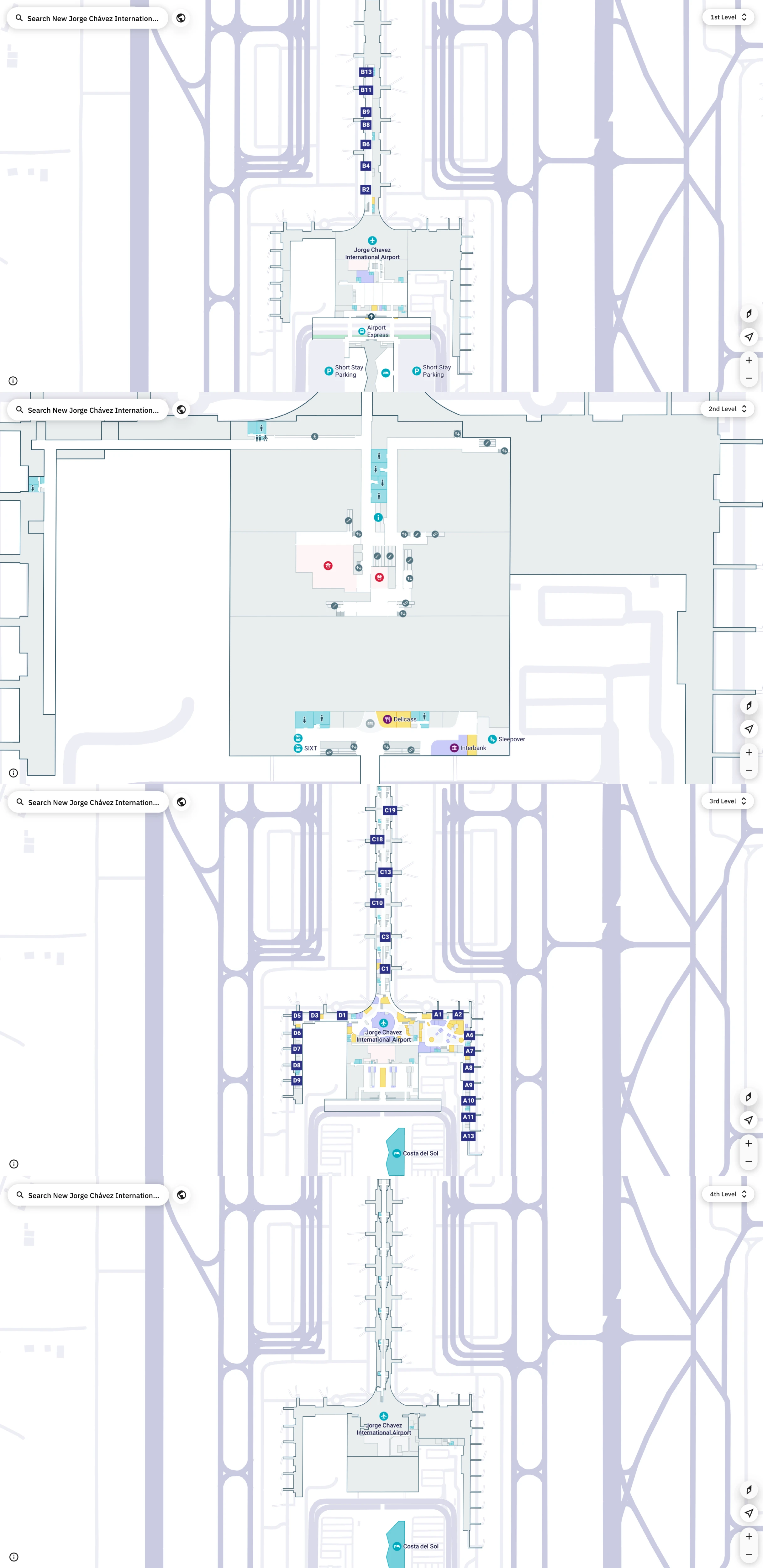
Jorge Chávez International Airport Level 1 Map 2026
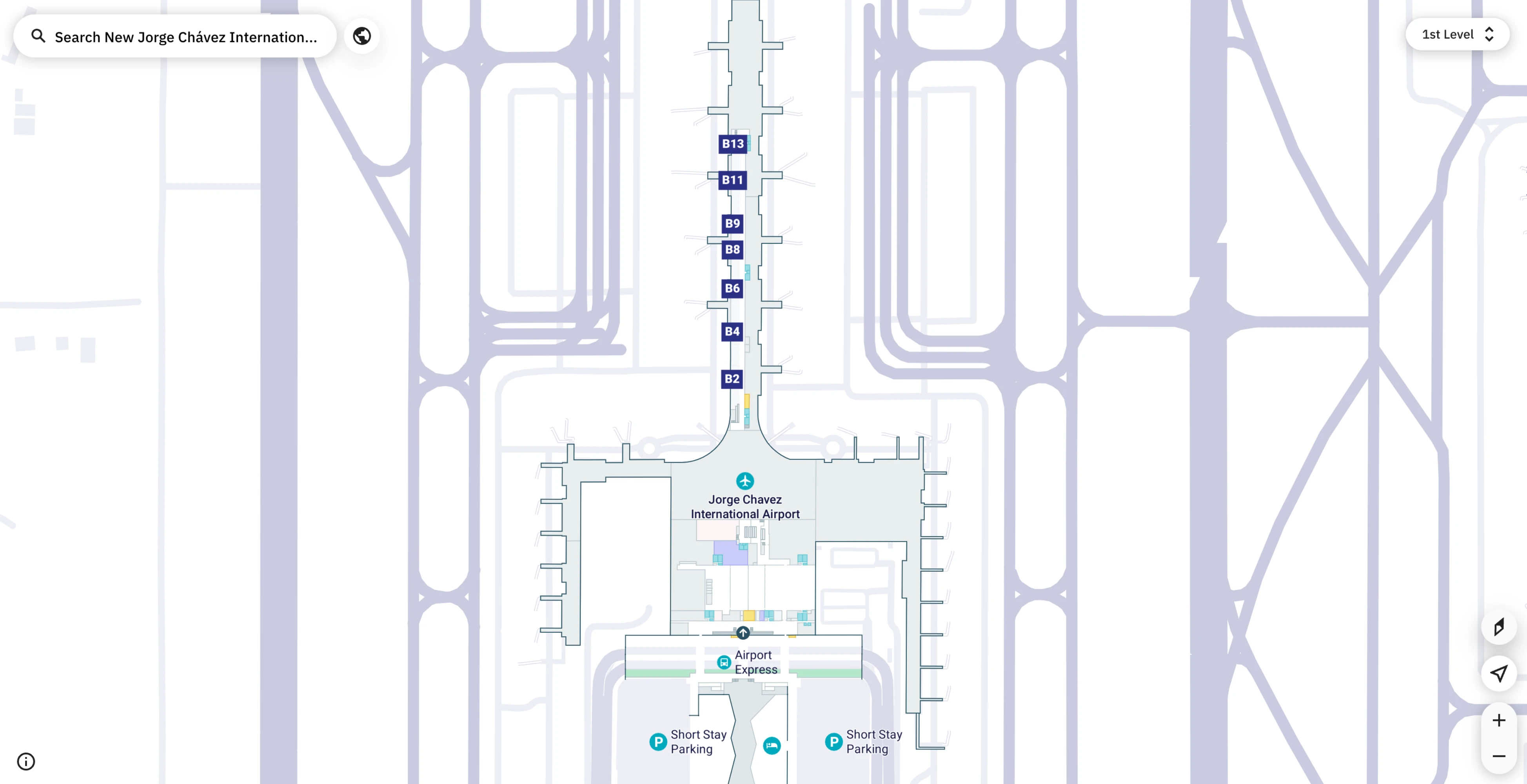
Jorge Chávez International Airport Level 2 Map 2026
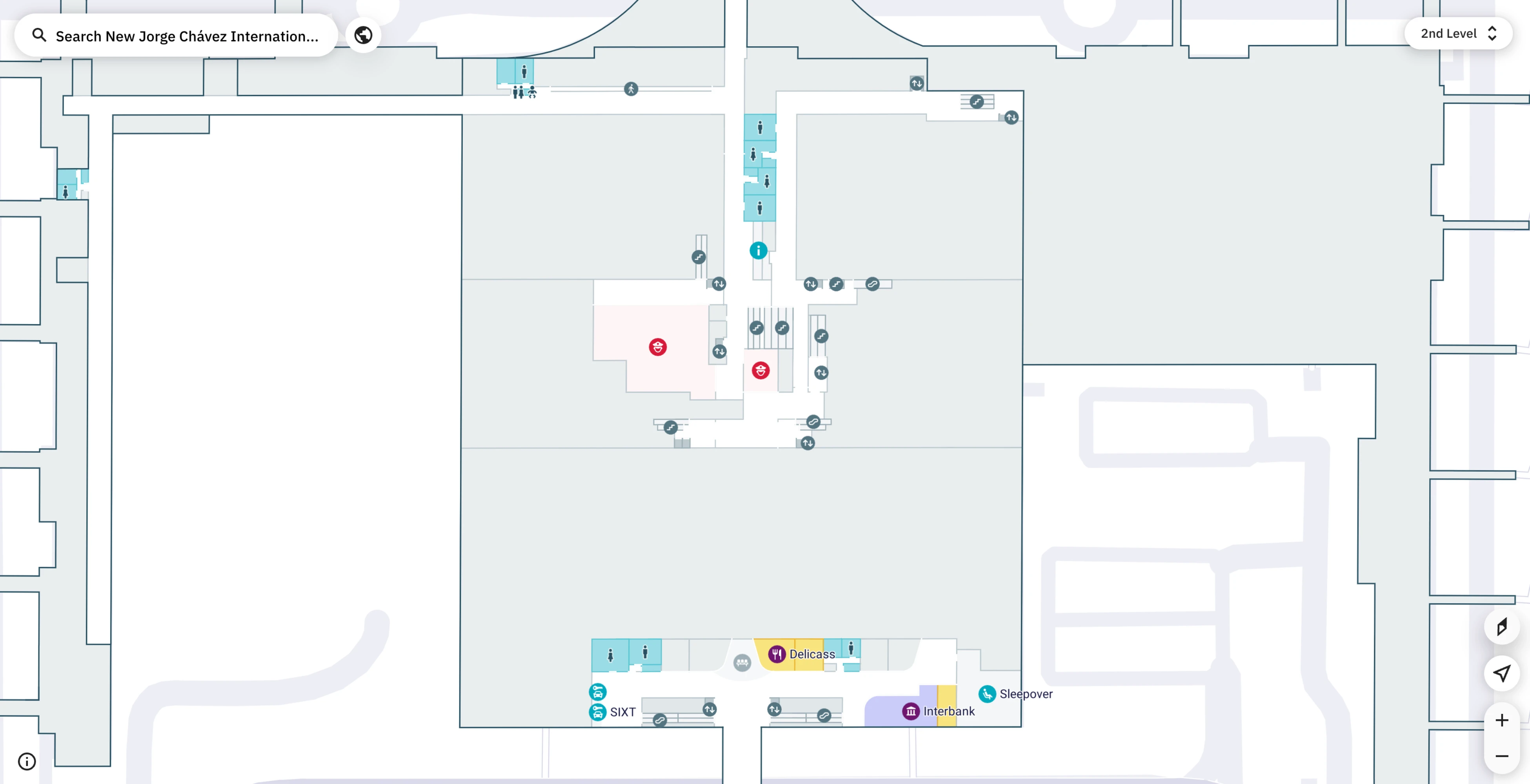
Jorge Chávez International Airport Level 3 Map 2026
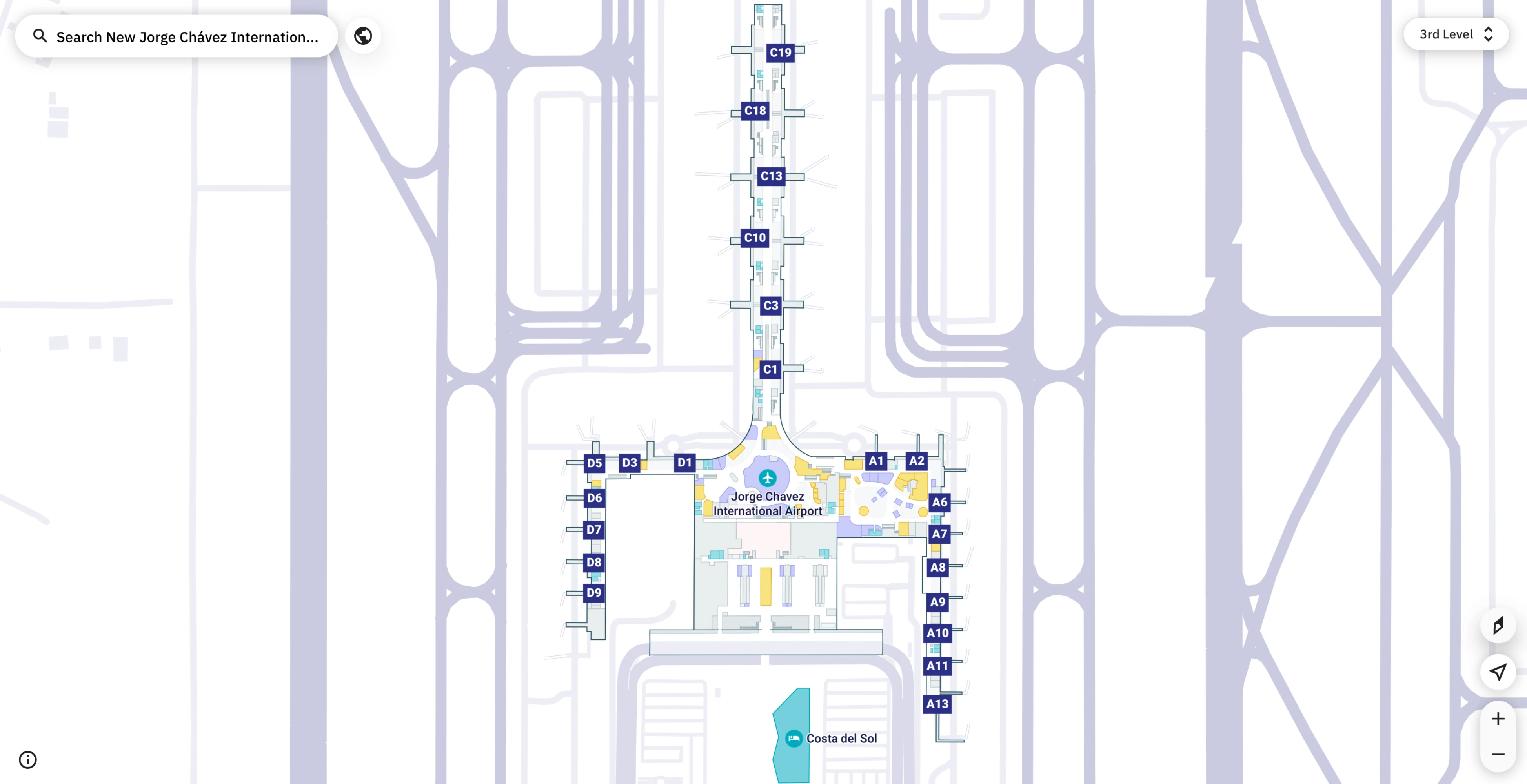
Jorge Chávez International Airport Level 4 Map 2026
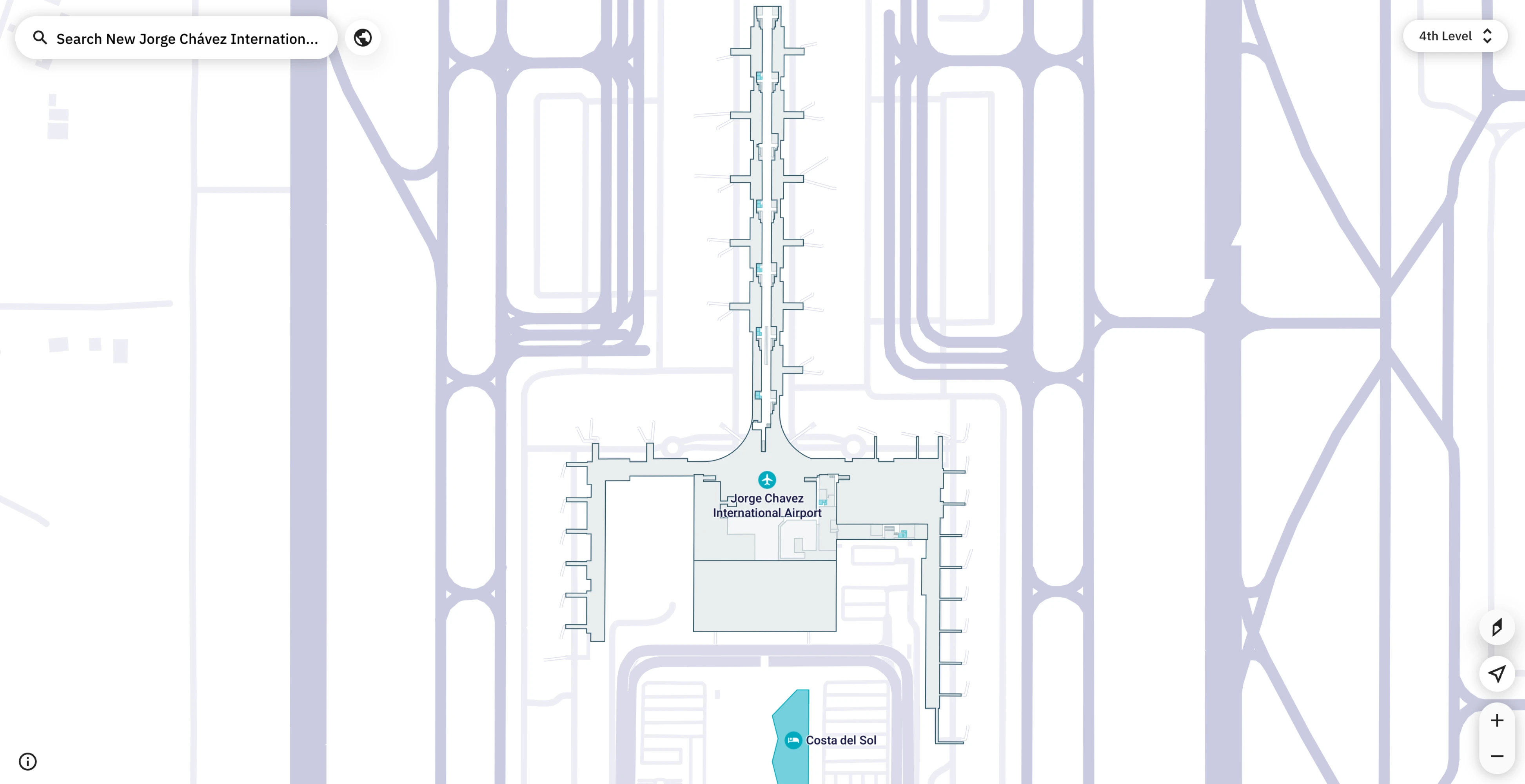
2026 Jorge Chávez International Airport Map Guide
What is the exact location of the international→domestic baggage recheck (bag drop) point after customs, relative to the arrivals exit?
A universal post-customs recheck belt does not exist at the LIM new terminal, so most international→domestic transfers require exiting Customs into the public Arrivals Hall on Level 1 and then rechecking bags upstairs at the airline counters on Level 3.
The practical “recheck point” is the Level 3 Check-in Hall (not a belt after Customs). After you clear Customs and step into Level 1 public Arrivals, keep your bags and head to the nearest vertical transport core (ramps with travelators are typically fastest with trolleys) up to Level 3. Once in the Check-in Hall, the domestic area is generally on the right/north wing (Zones A/B), where you join your airline’s bag-drop or counter queue before returning to the central security checkpoint behind the hall.
What is the exact walking route from International Arrivals exit doors to the domestic check-in hall entrance (the first point where you can re-enter the system)?
The route is a landside vertical loop: exit Customs into Level 1 public Arrivals, then take ramps/elevators up to Level 3 Check-in Hall and walk to the domestic counter zone on the right/north side.
From Level 1 Arrivals (after Customs), keep your bags and follow signs for check-in/salidas while staying inside the terminal to reach the main vertical transport node (look for the broad ramps with travelators designed for luggage carts). Ride the ramps or elevators up to Level 3 and enter the long, linear Check-in Hall. Domestic check-in is generally positioned on the right wing (north side, often Zones A/B), while the ramps tend to deposit you closer to the central/south portion—expect an interior walk of roughly 100–200 meters to reach the correct domestic counters before you can drop bags and proceed to the central security funnel at the back of the hall.
Where is the rideshare pickup zone (Uber/ride apps) on the landside map—down to the door/bay/level travelers must reach?
Rideshare pickup is geofenced to Parking E2, reached from Level 1 Arrivals via Door 3 and the marked crosswalks across the internal access road.
From the Level 1 public Arrivals Hall, orient to the terminal exit doors and choose Door 3 (often described as the doors farthest to the right when facing outward). Exit the building, ignore the curbside pickup instinct, and use the designated pedestrian crosswalks to cross the internal roadway to the parking structure directly opposite the terminal labeled Estacionamiento E2. Inside Parking E2, follow the app-pickup signage to the designated rideshare bay/zone (drivers stage within the structure, not at the Arrivals curb), then match the license plate before approaching the vehicle.
Where are the official taxi counters/booths located inside the terminal (the specific area you should walk to before exiting into the curb chaos)?
Official taxi counters are inside the Level 1 Arrivals Hall immediately after Customs, positioned before the public exit doors so you can buy a fixed-fare ticket without stepping outside.
After you clear Customs and enter the Level 1 public Arrivals Hall, stay inside and look along the frontage area near the main passenger flow toward the exit doors for authorized operators’ booths (commonly branded Taxi365, Taxi Green, Taxi Directo). The key landmark is that these desks sit in the “buffer” zone between the Customs exit and the glass doors to the curb. Purchase at the counter first, then follow the staff escort route to the dedicated pickup lane/area adjacent to the same Level 1 exits, rather than negotiating with anyone waiting on the sidewalk outside.
Where is the physical choke-point for the longest queues on departures (the exact checkpoint area where lines stack: security vs passport control)?
The longest departures queues stack at the centralized security screening zone at the back of the Level 3 Check-in Hall, before flows split to domestic concourse vs outbound immigration for international.
Level 3 operates as a single funnel: passengers from all airlines queue in front of the main security entry behind the long bank of check-in counters, so line buildup happens here during the morning peak (roughly 06:00–09:00) when many flights depart at once. After you clear this security point, domestic passengers peel right toward Concourse A, while international passengers go left toward outbound immigration/passport control and the international gates. Passport control can queue later for international, but the “super-queue” that hits everyone first is the central security checkpoint on Level 3.
Where are the immigration e-gates positioned relative to the main immigration hall flow (so you can visually choose the correct lane)?
Immigration e-gates sit prominently within the Level 1 Immigration Hall but are functionally tied to the Nationals/Residents flow rather than the foreigners’ manual-booth lanes.
After you descend into the Level 1 immigration processing space, you’ll see the hall split into two primary streams: Nationals/Residents vs Foreigners/Non-Residents. The automated e-gates (about 29) are positioned in the main hall where they’re easy to spot, but the visual cue that matters is the lane signage—e-gate access is restricted to Peruvian citizens and qualified residents (typically with biometric passports and MigraCheck preregistration). If you’re a tourist/non-resident, stay committed to the staffed booth queue even if the e-gates look faster, because that “shortcut” lane will dead-end for you.
Where is the nearest pedestrian-safe exit path shown on airport access maps—specifically, is there any marked sidewalk route from terminal doors to a public road/bus stop?
No marked pedestrian-safe exit route exists from the new LIM terminal doors to a public road or bus stop, because the campus is designed as a vehicle-only access zone with a roughly 2 km internal roadway and bridge approach that lacks sidewalks.
The constraint shows up in the access geometry: the only way on/off the terminal “island” is via controlled vehicle roads from Av. Morales Duárez, using temporary modular bridges that do not provide pedestrian protection. From the terminal façade, the long internal approach road is a high-speed, controlled environment, and security/police enforce the no-walking rule. If you need “public transport,” the workable version is the airport’s internalized bus option (e.g., AeroDirecto) accessed as a ticketed service within the airport transport system, not by walking to an external street stop.
Where is the designated waiting area for passengers who are too early to enter domestic screening/check-in (the exact landside zone people end up stuck in)?
The designated early-arrival waiting zone is Level 2 “Perú Plaza,” the landside mezzanine built for long dwell times before check-in opens.
When you hit the “3-hour wall” (airline counters not accepting bags yet), skip loitering in the Level 3 Check-in Hall and move one level down to Level 2 Perú Plaza via the central escalators/elevators near the main atrium. Perú Plaza functions as the public, non-ticketed holding area with food court seating and retail, and it’s also where the capsule-hotel option is located for rest. Use this level as your base until your airline’s domestic check-in/bag drop opens, then return up to Level 3 to re-enter the processing flow.
What is the exact corridor path and distance that connecting passengers must walk for an international-to-international transfer (from arrival corridor to transfer screening)?
International-to-international transfers use a dedicated Level 2 airside connections corridor that diverts before Level 1 immigration and leads directly to a Level 2 transfer security checkpoint, followed by escalators up to Level 3 international departures.
After you exit the aircraft into the arrivals corridor (typically Level 2/3), follow signage for “Conexiones Internacionales” rather than “Arrivals/Migraciones.” This keeps you in the sterile zone and feeds you into the Level 2 Transfer Hall, where all transit passengers rescreen at a dedicated security point equipped with CT scanners. Once through, you take escalators up to the Level 3 international departure concourse (Gates D/C). The audit identifies this as spatially compact and “moderate” in walking distance, but it does not provide a measured meter count.
Where are the arrival hall exit points that lead into the highest-risk solicitation area (the doors that spill you into unofficial taxi hawkers vs the doors that keep you inside controlled transport counters)?
The highest-risk solicitation exposure starts immediately outside the Level 1 glass exit doors, because the controlled zone is inside the Arrivals Hall where the official taxi counters sit before you ever step outdoors.
To stay in the controlled flow, complete your transport decision inside Level 1: walk from the Customs exit directly to the authorized taxi booths (Taxi365/Taxi Green/Taxi Directo) located in the Arrivals Hall before the doors, then follow staff to the dedicated pickup lane. If you exit first and linger on the sidewalk in the “greeting area” just outside the doors, you’re in the grey zone where unofficial touting concentrates. If you’re using rideshare, use the Door 3 exit as a “move-through” door only—go straight out and across the crosswalks to Parking E2 without stopping at the curb.
Where is the baggage claim hall layout (carousel placement relative to customs exit) that determines whether you can reach customs quickly during peak arrival banks?
Baggage claim is a large Level 1 hall with six automated carousels arranged with wide spacing, and the customs exit funnels from the end of the baggage hall after you leave the carousel area.
After immigration, you enter the Level 1 baggage claim space where large digital displays map flights to belts, and sightlines let you identify your carousel from a distance. The operational “race” is less about weaving through tight crowds and more about total walking distance: passengers assigned to the farther carousels have a longer trek back toward the customs-control funnel. Customs sits at the exit of the baggage hall and uses the red/green “semáforo” channel system, so the fastest path during peak banks is to locate your belt quickly via the overhead screens, then move directly toward the customs funnel once you have your bags rather than waiting near the carousel frontage.
Where are the primary vehicle approach/entry points to terminal drop-off on the access map (the exact ramps/roads that create the “which road do I take” anxiety)?
The approach vector is Av. Morales Duárez into the airport’s controlled internal roadway, crossing the temporary modular bridges over the Rímac River and then continuing along a roughly 2 km internal approach drive to the terminal curb system.
| Segment | What you follow | What it feeds into |
|---|---|---|
| City-side approach | Av. Morales Duárez | Airport access checkpoint and bridgehead |
| Choke entry | Modular (Bailey) bridges over the Rímac | Single funnel into airport internal roads |
| Internal approach | Long internal roadway (~2 km) | Terminal façade curb system |
| Departures drop-off | Level 3 curb “Speed Line” | 10-minute dwell-time zone; fees if overstayed |