George Bush Intercontinental Airport Terminal E Map (Most Up-To-Date)

Terminal E is a long, linear concourse with a central processing “front door” and a single main pier of gates extending away from the lobby. The departures level (Level 2) is the primary orientation point: curb → ticketing → TSA → gates in a straight push. Connections concentrate near the E1/C45 hinge where Terminal E blends into Terminal C inside Houston’s main airport hub, while vertical moves (up to Skyway, down to Subway) add the time surprises.
Map Table
| Level | Primary Nodes | Fast Connectors | Key Landmarks |
|---|---|---|---|
| Level 2 | United check-in banks, TSA checkpoint, main E concourse | Airside connector near Gate E1/C45, vertical access to Skyway (Level 3) | Door E-102–E-103 zone, central “marketplace” node |
| Level 1 | International arrivals hall, CBP exit flow, re-check belts | Sterile re-entry vertical core to Level 2 security | “Right turn” decision point after Customs |
| Level LL | Subway platform, inter-terminal tunnel spine | Subway loop (A–B–C–D/E–Marriott), walk tunnel to Terminal C | “Subway / Inter-Terminal Train” wayfinding bank |
| Level 3 | Skyway station access | Skyway to A/B/C/D | “Terminal D/E” station entrance |
George Bush Intercontinental Airport Terminal E Map Strategy
- Treat Level 2 as the only “true” departure start: aim for the central ticketing hall and the Terminal E TSA checkpoint, not a fallback to Terminal C unless you are explicitly redirected by live ops.
- Use the E1/C45 hinge to kill connection anxiety: for C29–C45 and most United-to-United transfers, the airside walk through the connector is the fast path; Skyway adds vertical waits and station overhead.
- Lock in the sterile re-entry move for international connections: after Customs, turn right to the re-check belts and take the adjacent elevators/escalators back up for dedicated re-screening, avoiding the public meeter/greeter exit.
- Assume “baggage decoupling” on domestic arrivals: if monitors/app show Terminal C claim, stay inside the secure flow and walk to Terminal C before exiting so you don’t end up landside with an extra tunnel/Subway leg.
2026 George Bush Intercontinental Airport Terminal E Map + Printable PDF
Terminal E’s core is stable for departures in 2026: the Level 2 ticketing lobby and the consolidated TSA checkpoint remain the intended entry, even while construction churn can shift which paths feel “open” day-to-day. The printable map you want is the one that highlights the Level 2 security front door, the E1/C45 connector, and the Level 1 international re-check path so you don’t get forced into a time-wasting reroute.

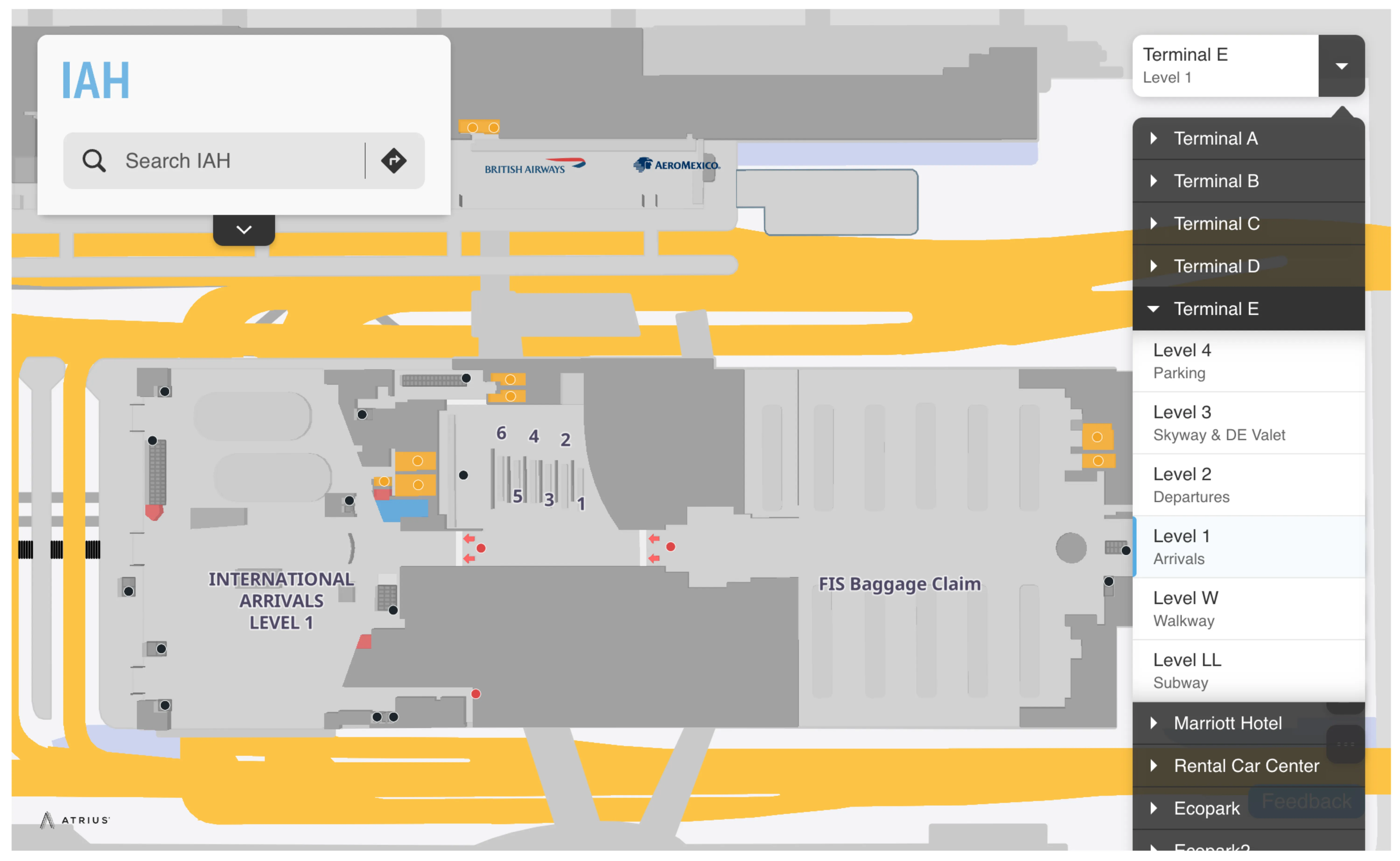
George Bush Intercontinental Airport Terminal E Level 1 Arrivals Map 2025
George Bush Intercontinental Airport Terminal E Level 2 Departures Map 2025
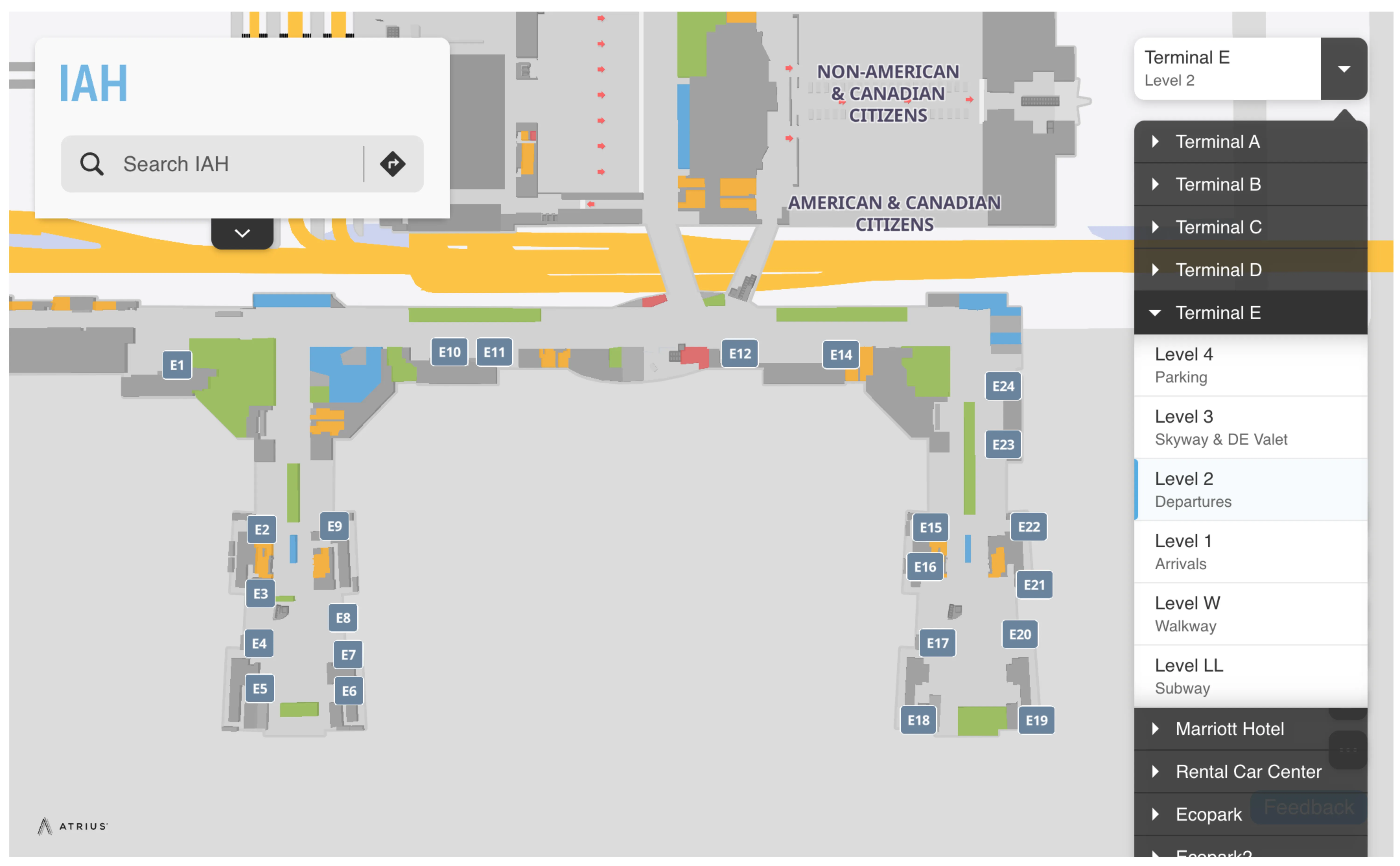
George Bush Intercontinental Airport Terminal E Level 3 Skyway and DE Valet Map 2025
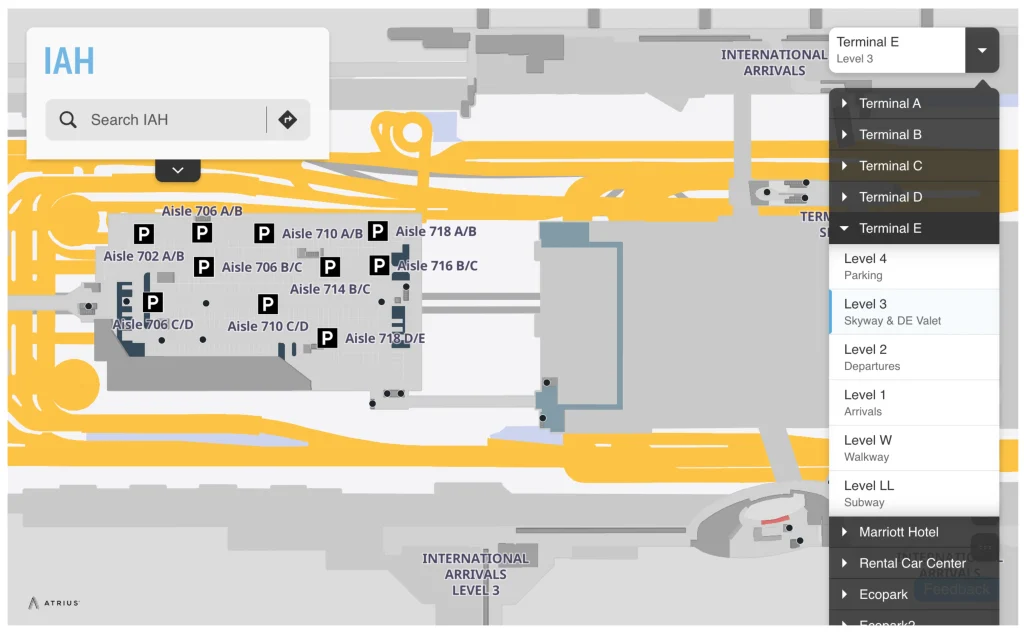
George Bush Intercontinental Airport Terminal E Level 4 Parking Map 2025
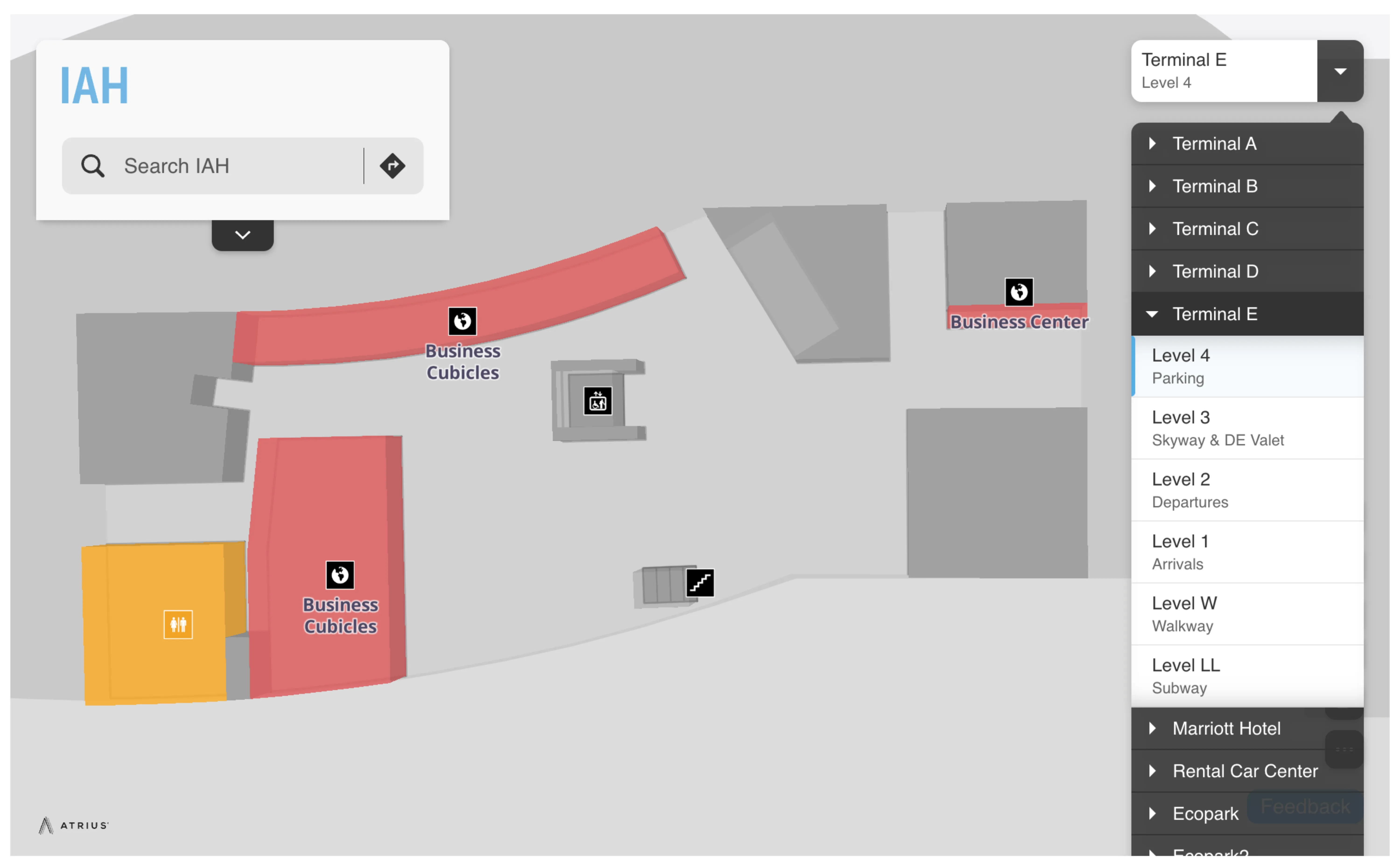
George Bush Intercontinental Airport Terminal E Level LL Subway Map 2025

George Bush Intercontinental Airport Terminal E Level W Walkway Map 2025
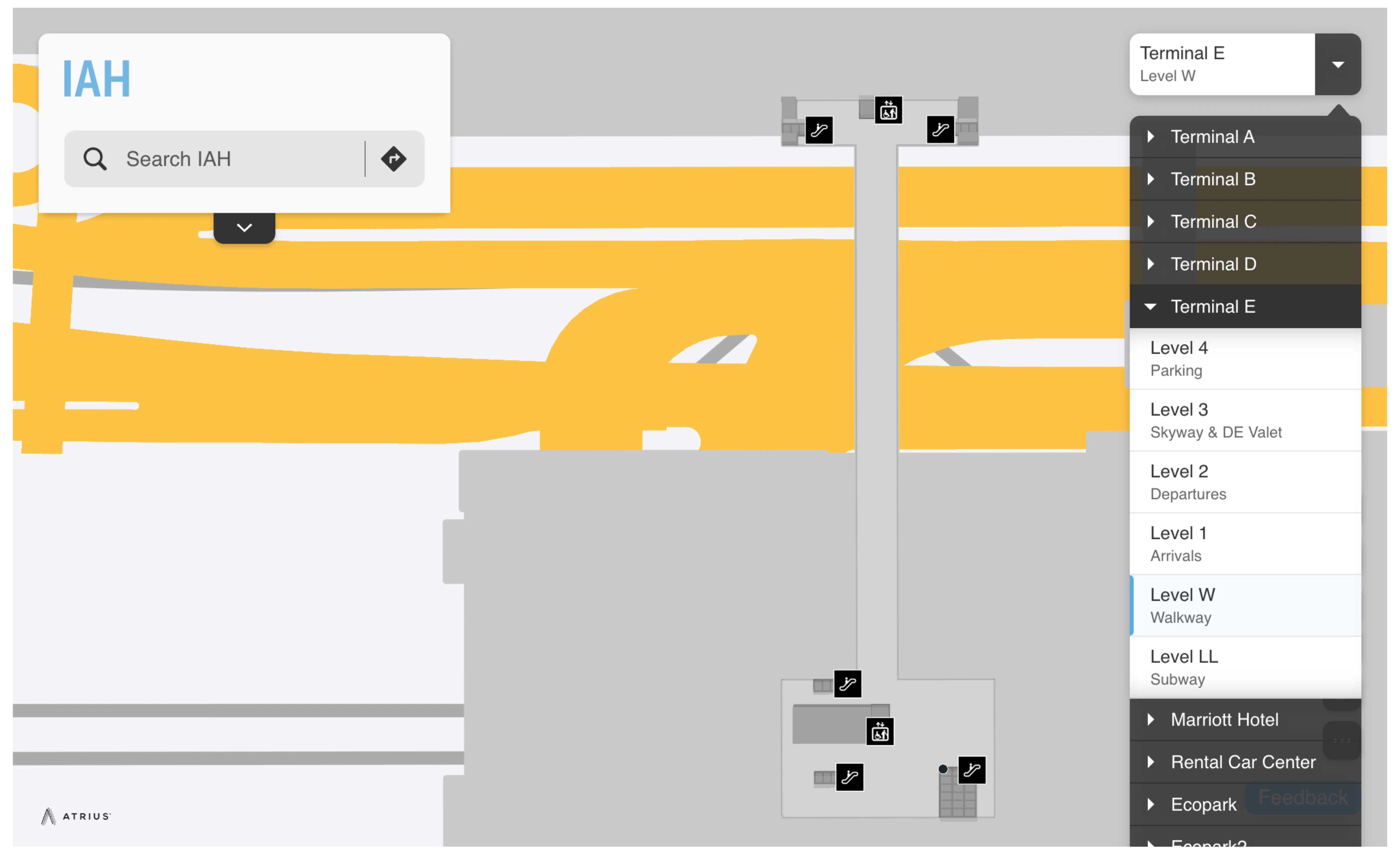
2026 George Bush Intercontinental Airport Terminal E Map Guide
What is the exact location (floor + nearest landmark) of the Terminal E TSA checkpoint entrance?
The Terminal E TSA checkpoint entrance is on Level 2 (Departures), centered inside the new United Airlines ticketing lobby directly opposite the main curbside entry doors. The nearest landmark is the central doors in the Door E-102 to E-103 area, with the checkpoint positioned as the visual focal point straight ahead from that entrance line.
From curbside Level 2, enter near Door E-102/E-103 and walk into the open-plan ticketing hall; the TSA document-check podiums sit beyond the United check-in banks in a direct line-of-sight. From the United counters, the approach is under 2 minutes on the same level with no turns into side corridors and no level changes.
Where is the Terminal E international-arrivals security re-entry checkpoint located relative to the recheck belt (sterile re-entry path)?
The Terminal E international-arrivals security re-entry checkpoint is immediately adjacent to the re-check belts on Level 1, using the vertical core (elevators/escalators) directly behind or next to the belt wall. The dealbreaker is exiting straight into the public meeter/greeter lobby after Customs, which breaks the sterile path and forces a longer reprocess.
After you clear CBP and step out of Customs, turn right; the United/Star Alliance re-check belts run along that right-hand wall. The dedicated re-entry access sits right there at the same node—use those elevators/escalators up to Level 2 to re-enter security without traversing the public arrivals hall. If you instead go straight through the meeter/greeter doors, you’ve effectively reset your connection and join the main public checkpoint flow upstairs.
What is the walking time (minutes) from Terminal E TSA exit to the nearest Skyway station entrance?
Walking takes about 3 to 4 minutes from the Terminal E TSA exit to the nearest Skyway station entrance. The nearest landmark sequence is the central concessions “marketplace” node on Level 2 and the vertical transition up to Level 3.
After clearing TSA on Level 2, continue forward into the main post-security hub and follow overhead signs for “Skyway.” The station access is one level up, so the time includes the short concourse walk plus the escalator/elevator ride to Level 3. The Skyway entrance is at the D/E shared station core rather than a separate Terminal E-only stop.
What is the exact Skyway station name/stop that serves Terminal E gates (closest station to E gates)?
The Skyway stop for Terminal E gates is the Terminal D/E Station. There is no separate “Terminal E” Skyway station, and the closest drop-off point is the shared D/E station core between the two international terminals.
On Skyway signage and in-wayfinding prompts, look specifically for “Terminal D/E.” From that station, you transition down from Level 3 to the gate level (Level 2) via the station’s elevators/escalators, then follow concourse signage into the E pier for your gate. If you’re already near the E1/C45 connector, walking airside is often faster than riding up to Skyway.
What is the walking distance from Terminal E TSA exit to Gate E16 (use the fastest path)?
Walking distance is approximately 1,200 to 1,500 feet (about 0.25 miles) from the Terminal E TSA exit to Gate E16 using the fastest path. The nearest landmark pivot is the central post-security “marketplace” node where the concourse splits into the main E pier.
From the TSA exit on Level 2, go straight through the central concessions hub, then bear left into the E concourse pier. Gate E16 sits about midway down the pier on the right-hand side, past the initial run of low-number E gates. At a normal pace, this distance typically converts to about 5 to 7 minutes depending on crowding in the hub.
What is the walking distance from Gate E16 to Gate C30 using the shortest airside route?
Walking distance is approximately 2,400 to 2,800 feet (about 0.5 miles) from Gate E16 to Gate C30 using the shortest airside route. Walking is typically faster than Skyway on this specific E-to-high-C vector because it avoids the Level 3 station climb and train wait.
Start at Gate E16 and walk back toward the central Terminal E hub, following airside signs for Terminal C. Continue through the connector corridor toward the E1 area, then pass the Terminal boundary at the Gate E1/Gate C45 hinge where the concourse becomes Terminal C. Once you’re in the C “high gates” spine (anchored near Gate C45), continue along the concourse to Gate C30. At a brisk pace, this run is commonly 10 to 12 minutes door-to-door.
Where is the landside “Subway” access point nearest Terminal E (exact entry location from baggage claim level)?
The nearest landside Subway access for Terminal E is on Level LL, reached from the Level 1 arrivals/baggage-claim hall via the central elevator/escalator bank signed for the inter-terminal train. The closest landmark is the main Terminal E arrivals hall core where “Subway” and “Inter-Terminal Train” wayfinding begins.
From Level 1, stay inside the terminal and follow overhead signs for “Subway.” Use the elevators (or escalators where available) down past the arrivals level to the Lower Level (LL), where the Subway platform and tunnel system sit. This is the same landside network that links Terminal A, B, C, the D/E stop, and the Marriott. Note the daily overnight closure window can affect plans if you arrive very late.
What is the shortest mapped route from Terminal C bag check to Terminal E TSA (landside, no re-screening until E)?
The shortest route is the climate-controlled underground tunnel on Level LL from Terminal C to Terminal E, then straight up to Level 2 for the Terminal E TSA checkpoint. This keeps you landside the entire way and avoids Skyway station overhead and train wait time.
| Step | Exact path anchors | Typical time |
|---|---|---|
| 1 | From Terminal C bag check area, go to the nearest elevator bank and select Level LL (Lower Level) | 2–4 min |
| 2 | On Level LL, follow “Inter-Terminal Connections / Subway” wayfinding into the pedestrian tunnel toward D/E | 1–2 min |
| 3 | Walk the LL tunnel from Terminal C toward Terminal E (parallel to the Subway route) | 6–8 min |
| 4 | Arrive at Terminal E LL vertical core, take elevators up to Level 2 (Departures) | 2–3 min |
| 5 | Enter the Level 2 ticketing hall and walk to the central TSA entrance opposite the Door E-102/E-103 entry zone | 1–2 min |
What is the exact location of the Terminal E domestic baggage claim redirect point (where passengers are directed toward Terminal C claim)?
The redirect point is informational in the Terminal E arrivals flow, because domestic baggage claim is handled in Terminal C on Level 1 rather than at Terminal E. The nearest landmark outcome is the Terminal C baggage claim hall itself, where the belts receive bags directly, while Terminal E provides guidance via monitors/signage and app messaging.
Terminal E does not operate a domestic baggage-claim belt set, so there isn’t a single “handoff counter” where bags are physically rerouted inside E. The practical redirect happens when you see “Baggage Claim: Terminal C” on flight information displays and wayfinding in the Terminal E arrivals area, prompting you to proceed toward the E1/C45 connector to reach Terminal C before exiting. If you exit landside at Terminal E first, you’ve missed the cleanest redirect and add a tunnel/Subway leg.
What is the shortest route from Terminal E arrivals to Terminal C baggage claim (including connectors and level changes)?
The shortest route is to stay airside after deplaning in Terminal E, walk through the E1/C45 connector into Terminal C, then exit in Terminal C and descend to Level 1 baggage claim. The dealbreaker is exiting Terminal E to landside first, which adds a tunnel/Subway transfer and extra time.
After you arrive at an E gate, follow concourse signs toward Gate E1 and “Terminal C” while remaining inside the secure area. Cross the connector where the hallway transitions at the Gate E1/Gate C45 hinge, then continue to the nearest “Exit / Baggage Claim” for Terminal C. Once you exit the secure zone in Terminal C, take the escalators/elevators down to Level 1 for baggage claim. This is typically an 8 to 12 minute gate-to-claim run depending on your arrival gate and corridor crowding.
What is the fastest airside route from Terminal E TSA to Terminal C Gate C45 (Skyway vs walk — choose the faster mapped option)?
Walking is the fastest option from Terminal E TSA to Gate C45, typically taking about 4 to 6 minutes. Skyway loses time on this move because you must go up to Level 3, wait, ride, then come back down, even though C45 sits right on the E/C seam.
After exiting TSA on Level 2, follow airside signs toward the Terminal E concourse and continue toward the connector corridor anchored by Gate E1. As you pass the hinge point where Terminal E becomes Terminal C, Gate C45 is essentially the first Terminal C gate you encounter on the secure side. If you find yourself heading up toward “Skyway” signage, you’re adding unnecessary vertical distance for a connection that is physically contiguous by foot.
Where is the Purple Garage pedestrian egress into Terminal E (exact bridge/elevator path and which exit number is shortest)?
The shortest pedestrian egress from the Purple Garage into Terminal E is via the Exit 2 elevator bank, which delivers you directly to the operational terminal levels without the bridge detour. The “bridge” option tied to Exit 4 is the common trap because it adds level changes and extra wayfinding once you reach the terminal side.
From your parking spot, follow garage signage for Exit 2 and enter that elevator core. Ride the elevators to Level 2 for Departures/Check-in (or Level 1 for International Arrivals pickup), then walk straight into the Terminal E lobby frontage from that direct vertical drop. Avoid following Exit 4 directions unless you specifically want the pedestrian bridge route, because it typically requires additional transitions to land correctly relative to the ticketing hall.
What is the exact elevator bank location (and level) that reliably connects Purple Garage → Terminal E on the simplest path?
The reliable elevator bank is the Purple Garage Exit 2 elevator core, with Level 2 as the simplest arrival level for Terminal E check-in and the TSA entrance. This is the direct vertical vector that avoids the bridge routing tied to other exits.
From inside the Purple Garage, follow signs for “Exit 2” and enter that elevator lobby; do not route yourself toward the pedestrian bridge. Select Level 2 to emerge at the Terminal E departures/check-in interface where the United ticketing hall and the central TSA checkpoint are aligned. Use Level 1 only if you’re meeting international arrivals, since that level aligns to the arrivals hall rather than the departure processing core.
What is the exact curbside drop-off zone for Terminal E departures (which curb/door set aligns with the ticketing/check-in lobby)?
The correct curbside drop-off for Terminal E departures is on Level 2 at the Terminal E Departures curb, aligned best with the central Door E-102 to E-103 entry area for the ticketing/check-in lobby. The closest landmark is the main entry line where you get immediate sightlines into the United check-in banks and the central security focal point.
For the cleanest entry, direct your driver (or rideshare) to Terminal E Departures on the south-side curb alignment, then aim to be let out near Door E-102/E-103. Those doors place you at the center of the processing hall, minimizing backtracking to Premier/Economy counter banks and keeping the TSA checkpoint approach straightforward. If you’re dropped farther down the linear curb, you’ll still reach the same lobby, but you add extra indoor walking before you even start the check-in → security flow.
What is the shortest indoor walking route from Terminal E check-in counters to the Terminal E TSA checkpoint (in minutes)?
Walking takes under 2 minutes from the Terminal E check-in counters to the Terminal E TSA checkpoint on Level 2. The nearest landmark cue is the open-plan ticketing hall where the checkpoint is the central focal point directly beyond the counter banks.
After finishing at the United check-in area, walk straight across the same Level 2 lobby toward the TSA document-check podiums; there are no corridor turns and no escalator/elevator moves. If you entered near Door E-102/E-103, the counters and checkpoint sit in the same central field of view, so the fastest path is simply a direct line through the middle of the processing hall.