
Barcelona-El Prat Airport Terminal 1 Map (Most Up-To-Date)

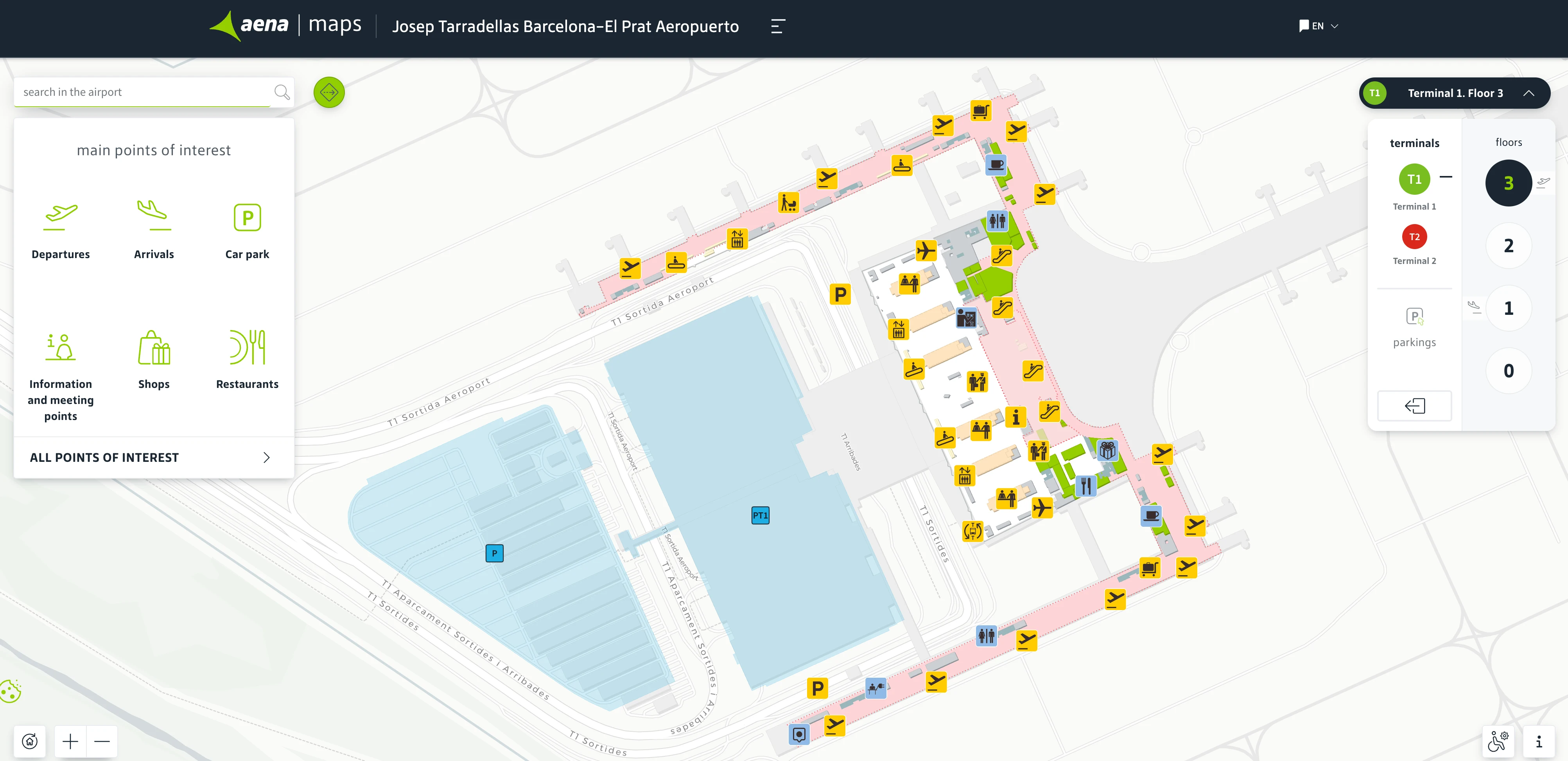
Barcelona–El Prat Terminal 1 (T1) is a large, sword-shaped terminal with a centralized “processor” core feeding long, linear piers. The building’s scale (hundreds of meters end-to-end) makes internal distance a primary navigation factor, especially after the single, central security funnel. Within Barcelona’s primary airport complex, T1’s layout is defined by one big Level 3 departures hall, a post-security retail core, and a long push out to Modules D/E for non-Schengen gates.
Map Table
| Zone | Connection | Walk Time | |
|---|---|---|---|
| Level 3 Departures Hall | Check-in → Security | Short–Moderate | central funnel, queue risk |
| Sky Centre (post-security core) | Split point: Schengen vs non-Schengen | Short | misroute risk, vertical trap |
| Non-Schengen path (Modules D/E) | Duty Free → Passport Control → D/E piers | Moderate | chokepoint before Y-split |
| Level 0 Arrivals “La Plaza” | Arrivals exit → T1↔T2 shuttle curb | Short | landside-only transfer |
Barcelona–El Prat (BCN) Terminal 1 Map Strategy
- Treat passport control as a second “security-style” queue on the non-Schengen path; build buffer before the D/E pier split.
- Plan T1↔T2 as landside-only: exit to public Arrivals, take the shuttle, then re-clear security at the next terminal.
- Budget walking time from the central processor to distal D/E gates; the terminal’s length is the hidden delay after you think you’re “through.”
- Protect departure time by arriving early for bag drop/check-in; counter lines can outlast security, especially in peak banks.
2025 Barcelona-El Prat Airport Terminal 1 Map + Printable PDF
Current operations in 2026 still hinge on a single centralized security block and a long post-security walk to the furthest non-Schengen gates (Modules D/E). Time loss typically stacks at passport control (non-Schengen), plus forced landside transfers for T1↔T2 that require leaving the sterile area and re-clearing security. Fast Lane is a major variable because it’s not 24/7.
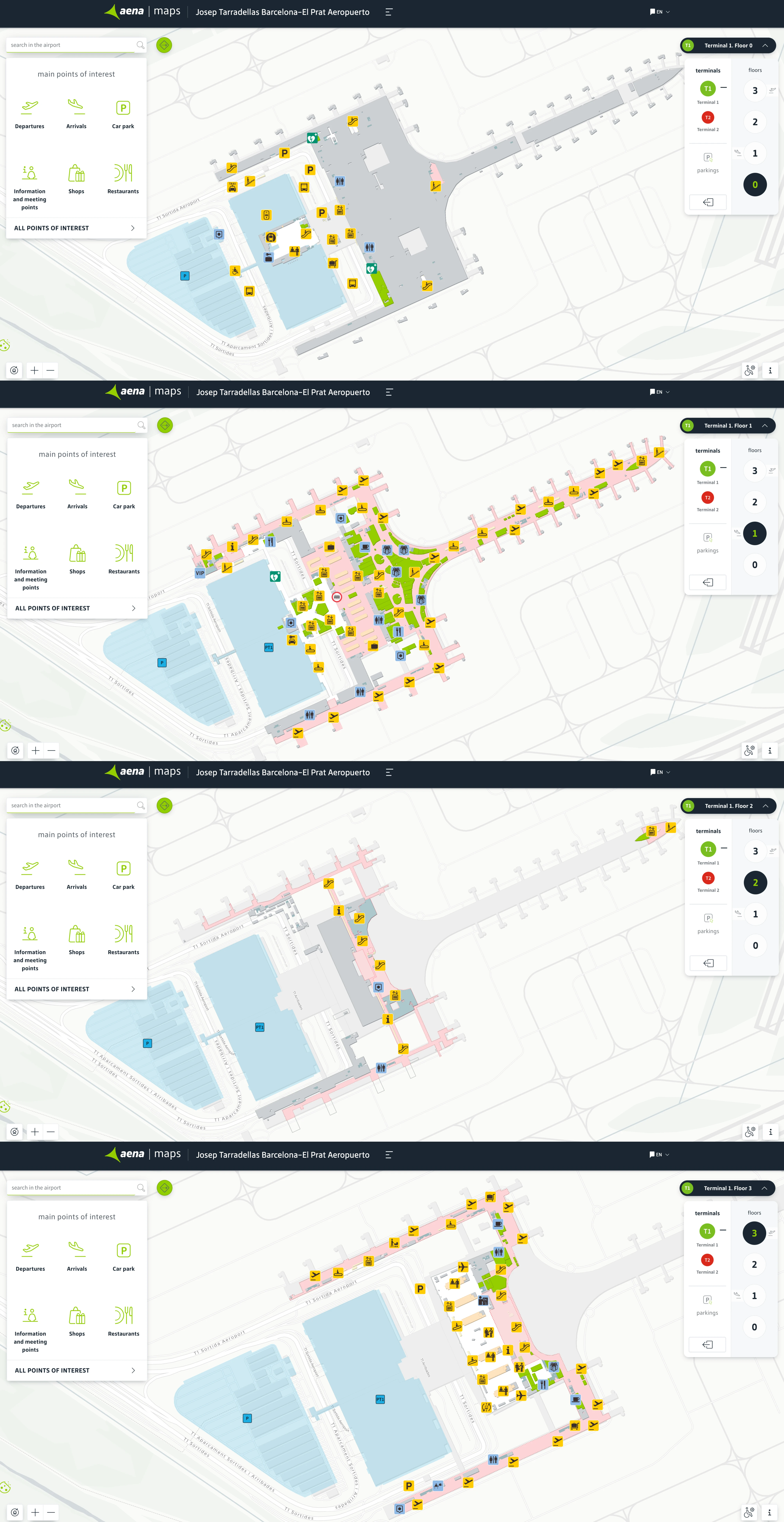
Barcelona-El Prat Airport Terminal 1 Level 0 Map 2025
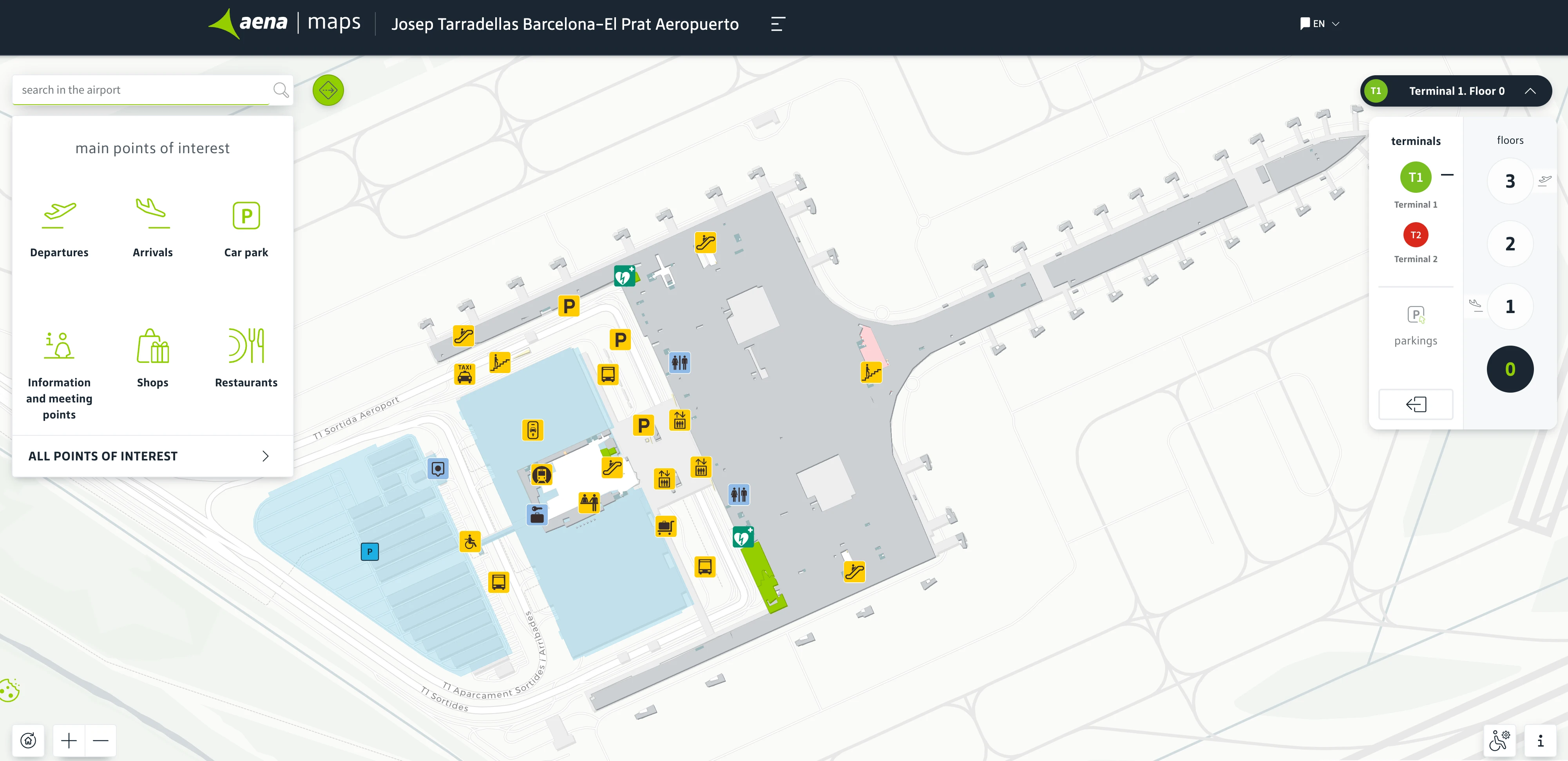
Barcelona-El Prat Airport Terminal 1 Level 1 Map 2025
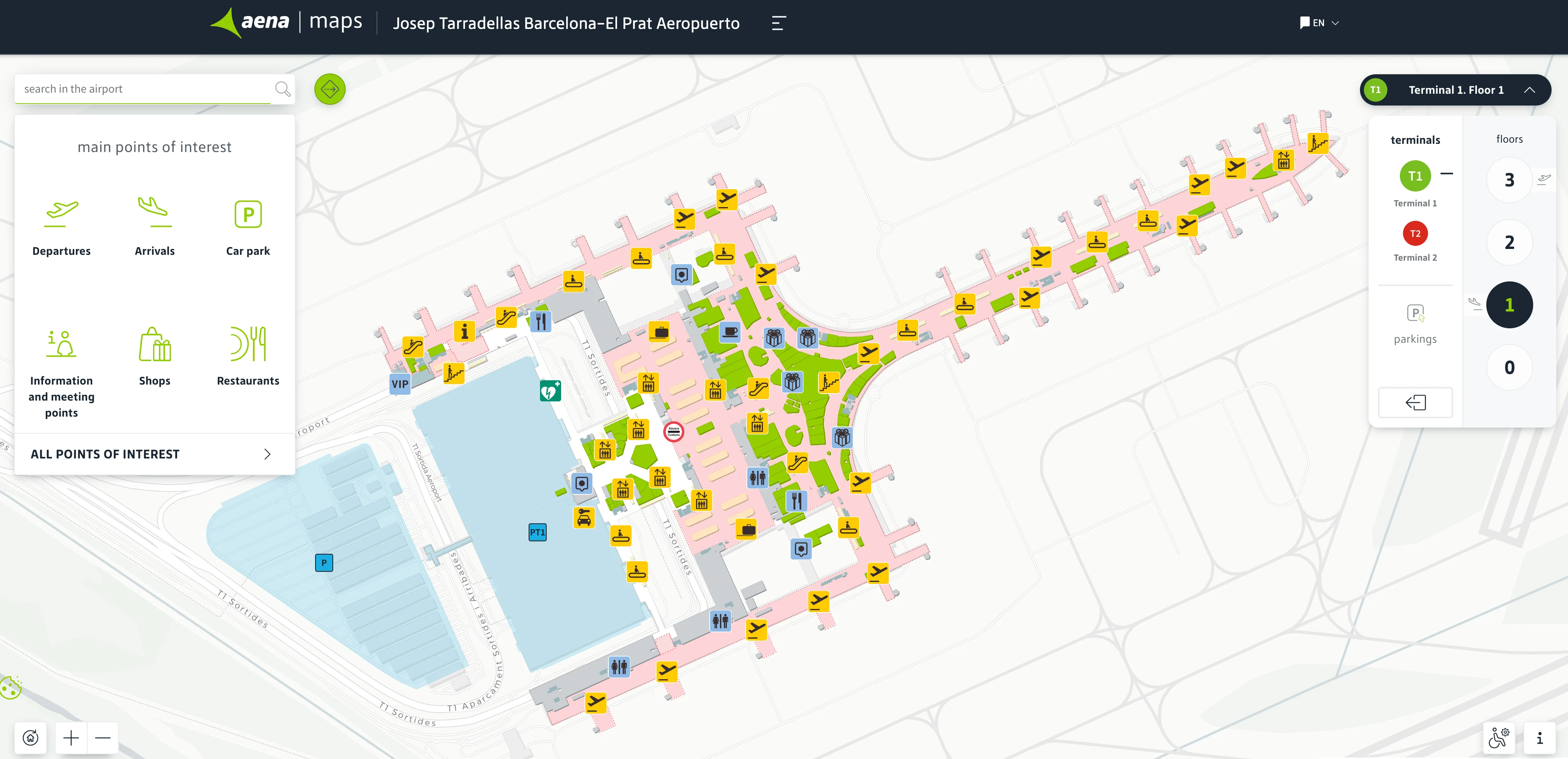
Barcelona-El Prat Airport Terminal 1 Level 2 Map 2025
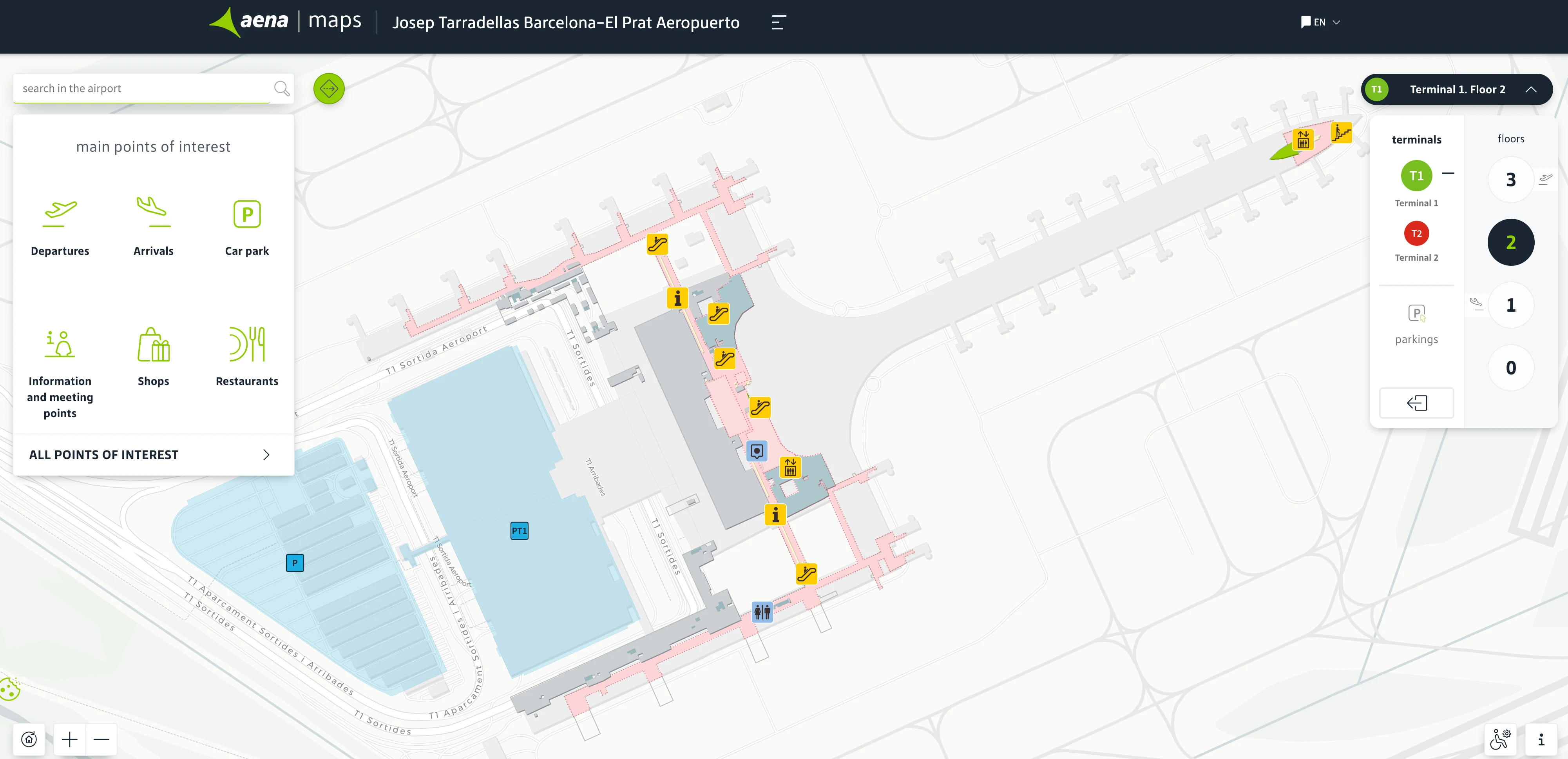
Barcelona-El Prat Airport Terminal 1 Level 3 Map 2025
2026 Barcelona-El Prat Airport Terminal 1 Map Guide
What is the shortest landside walking route from T1 International Arrivals exit to the inter-terminal shuttle bus stop (to T2), including floor/level changes?
The route stays entirely on Level 0 and ends at the curb directly outside Arrivals. From International Arrivals, follow baggage reclaim to the public Arrivals hall (“La Plaza”), then exit through the main glass façade doors to the curbside bus bays where the green inter-terminal shuttle stops.
After customs, stay in the Level 0 Arrivals flow until you’re in La Plaza, using the main exit doors (not side exits) so you land at the primary curb. The shuttle stop is typically about 100–150 meters from the doors along the terminal frontage; look for “Bus / Shuttle / T1–T2” signage and the green bus to avoid the blue Aerobus and hotel shuttles in adjacent bays.
Where exactly is the first passport control checkpoint located on the T1 non-Schengen path, relative to the main post-security split (where you choose Schengen vs non-Schengen flows)?
Passport control is on Level 3 immediately after the post-security duty-free walkthrough and before the pier branches into Modules D and E. The checkpoint sits downstream of the Sky Centre retail core, on the non-Schengen continuation that stays on the upper level rather than descending toward Schengen gates.
After clearing the central Level 3 security bank, you enter the main duty-free corridor and continue straight on the Level 3 flow for non-Schengen. The passport booths appear before the “Y” decision where the concourse divides toward the D pier versus the E pier, so you queue and clear passport control before committing to either branch. If you descend toward Level 1, you’ve effectively followed the Schengen path and will need to correct course back up.
What is the walking distance (meters) from the primary T1 security checkpoint to the furthest non-Schengen gate zone (as shown on the terminal map)?
The mapped walk is about 600–800 meters from the main Level 3 security checkpoint to the furthest non-Schengen gates in Module E. That range depends on which security lane you exit from and which exact E-gate is assigned at the distal tip.
The path runs straight through the post-security duty-free corridor, then through the centralized non-Schengen passport control checkpoint before the concourse splits toward Modules D and E. After passport control, follow the Level 3 spine into the E pier, using the moving-walkway segment when available. The distance feels longer than expected because the retail core near security is not visually connected to the far-end gate area, so “close to security” can still mean a 10–15 minute walk with bags.
Where is the AENA Fast Lane / priority security entrance located relative to standard security lanes in T1 (same hall vs separate corridor)?
The AENA Fast Lane is in the same Level 3 departures security hall as the standard lanes, running parallel to the main security filters rather than being in a separate remote corridor. It’s positioned centrally within the departures/check-in processor so premium passengers can access it from multiple airline check-in zones.
From the Level 3 check-in hall, follow security signage to the main screening bank; Fast Lane appears as a clearly marked adjacent entry within the same security frontage. The operational catch is hours: T1 Fast Lane is typically available 04:00–23:00, so late-night departures and overnight disruptions can force you into the standard queue even if you planned for priority access.
What is the fastest mapped route from T1 baggage claim to the Vueling (or main) bag-drop/check-in counters (landside), including the correct floor?
The fastest route goes from Level 0 baggage reclaim to the Level 3 departures check-in hall via elevators, not ramps. After collecting bags, exit customs into the public Arrivals hall (“La Plaza”), then take the elevators up to Level 3 and walk into the main check-in counter array where Vueling’s zones are concentrated.
From baggage claim, stay on Level 0 until you’re fully landside in La Plaza, then choose the elevators located at the ends of the hall for a direct vertical shot to Level 3. Avoid the inclined ramps/moving-walkway ramps, which add distance and detour through intermediate spaces. Once on Level 3, orient by counter numbers and airline grouping; the hall is long and linear, so the last leg is a straight walk along the counter frontage to the Vueling bag-drop section.
Where is the closest security checkpoint to the non-Schengen gate area in T1 (the checkpoint that minimizes post-security walking)?
No closer checkpoint exists: the only security screening for departures is the centralized Level 3 security bank in the main departures processor. All non-Schengen passengers must clear that central checkpoint and then walk out along Level 3 toward passport control and Modules D/E.
Because security is centralized, you can’t “choose” a nearer checkpoint to reduce the D/E walk the way you might in terminals with multiple satellite filters. The practical minimizer is lane choice and exit positioning: using a security lane that exits you closer to the duty-free through-route reduces minor backtracking in the retail core, but it doesn’t change the core distance penalty. After security, the mandatory sequence remains Duty Free → Passport Control → D/E pier walk.
What is the shortest mapped path from the T1 shuttle-bus drop-off point to the main departures security entrance (including all required escalators/elevators)?
No airside access exists from the shuttle: you enter landside and then proceed to the central Level 3 security bank. During daytime operations (roughly 05:00–00:00), the shuttle drops at Level 3 curbside, so the shortest path is curb → main revolving/sliding doors → straight into the check-in hall → follow “Security/Departures” to the central screening lanes.
At night (roughly 00:00–05:00), the drop-off can shift to Level 0 Arrivals, forcing vertical travel: curb → Arrivals hall entry → elevator up to Level 3 → emerge into the check-in hall → walk forward to the security frontage. The key waypoint is the main Level 3 departures hall entrance; once inside, security is a single, obvious bank across the hall rather than multiple checkpoint choices.
Where is the exact landside exit point you must use to leave the T1 arrivals sterile area before a T1→T2 self-transfer (the point after which you can access the public terminal + transport)?
The required exit is the general public Arrivals exit into “La Plaza” on Level 0, after customs. That is the point where the sterile arrivals flow ends and you enter the public landside hall with curb access and ground transport options.
After baggage reclaim, follow the standard arrivals channel through customs control and into La Plaza, then use the main glass façade doors to reach the curbside shuttle stops. There is no dedicated inter-terminal transfer corridor that keeps you within a controlled area, so once you take this exit you’re fully landside and must re-enter departures screening later (and re-clear security) at the terminal you’re departing from.
What is the walking distance (meters) from exit passport control (departures) to the nearest restrooms and nearest water/food option in the non-Schengen departures area?
Restrooms are within about 50 meters of the passport control exit, typically positioned immediately adjacent to the control area. The nearest water/food option is not immediate; the first reliable landside-style food choice is roughly 150–200 meters away back toward the public Arrivals hall zone (“La Plaza”), with only limited vending-style options close to the immediate post-control flow.
In the non-Schengen process, passport control acts like a chokepoint node, and facilities cluster around it for basic needs like toilets. Food is the opposite: once you clear the control, you’re funneled onward along the Level 3 spine toward gates, where options can thin out depending on the pier segment and time of day. If you need a guaranteed grab-and-go, plan it before committing deep into the D/E walk.
What is the shortest route from T1 Metro access point (airport station entrance inside T1) to the departures check-in hall, measured by mapped walking distance?
The shortest route is the Metro L9 Sud connector tunnel to Terminal 1 Level 0, then elevators straight up to Level 3 check-in. Total mapped walking distance is roughly 500–700 meters from the Metro turnstiles to the first check-in counters, with the connector tunnel accounting for most of it.
Exit the Metro turnstiles and follow the signed connector passage toward “Terminal T1,” staying in the straight-through tunnel until you reach the terminal entry on Level 0. From the Level 0 entry, head to the nearest bank of elevators (best landmark: the main Arrivals hall zone) and ride directly to Level 3 Departures. Step out into the long departures/check-in hall and walk along the counter frontage to your airline zone.
Where is the taxi rank / rideshare pickup located relative to the T1 arrivals exit doors (which exit/door number or zone is closest)?
The taxi rank is directly outside the main Level 0 Arrivals exit doors along the curb, typically under the terminal frontage canopy. It’s the closest ground-transport pickup, generally within 50 meters of the sliding glass doors you use to exit into the public curbside zone.
After you enter La Plaza and leave through the primary façade doors, taxis line up parallel to the building on the same level with minimal walking and no level changes. Rideshare-style pickups can be less direct because they may use designated pickup areas or parking-structure zones, so the shortest “walk-out-and-go” option is the official taxi line immediately along the Arrivals curb.
What is the exact mapped route from bus deplaning/arrivals corridor (remote-stand bus arrival side) to passport control, including the first major waypoint/signposted junction?
Remote-stand arrivals add a built-in time penalty because you enter through a dedicated ground-level bus-arrival interface and then must climb into the main arrivals corridors before reaching the central processing block. From the remote-stand bus drop, follow the arrivals flow to the first vertical-transport node (escalator/elevator up), then continue through the glass-walled corridor toward the central processor where passport control is signed.
After the initial ascent, the first major waypoint is the main signposted junction where flows converge toward “Arrivals / Passport Control / Baggage Reclaim.” Stay on the passport-control direction rather than “Exit/Transport,” and keep moving toward the terminal core (the point where corridors widen and signage density increases). Compared with a jet-bridge arrival, expect the remote-stand path to feel like a long feeder corridor before you reach the centralized control hall.
Where is the closest staffed information/help desk to the T1 inter-terminal transfer decision point (the spot where travelers realize they must go landside to change terminals)?
The nearest staffed help desks are in the central terminal core, not near the pier ends where the transfer “surprise” often happens. The closest practical locations are the Sky Centre area (central post-security core around the main concourse) and the Level 3 check-in hall information points near the departures processor.
If you realize you must transfer landside while you’re still near the center, the Sky Centre is the fastest staffed zone to find AENA personnel before committing to a long backtrack. If the realization happens at a distal D/E gate, there is typically no staffed desk immediately nearby; the shortest path to human help is to follow the concourse back toward the main core until you reach the denser signage/retail zone where information counters are concentrated.


