Cape Town International Airport Map (Most Up-To-Date)

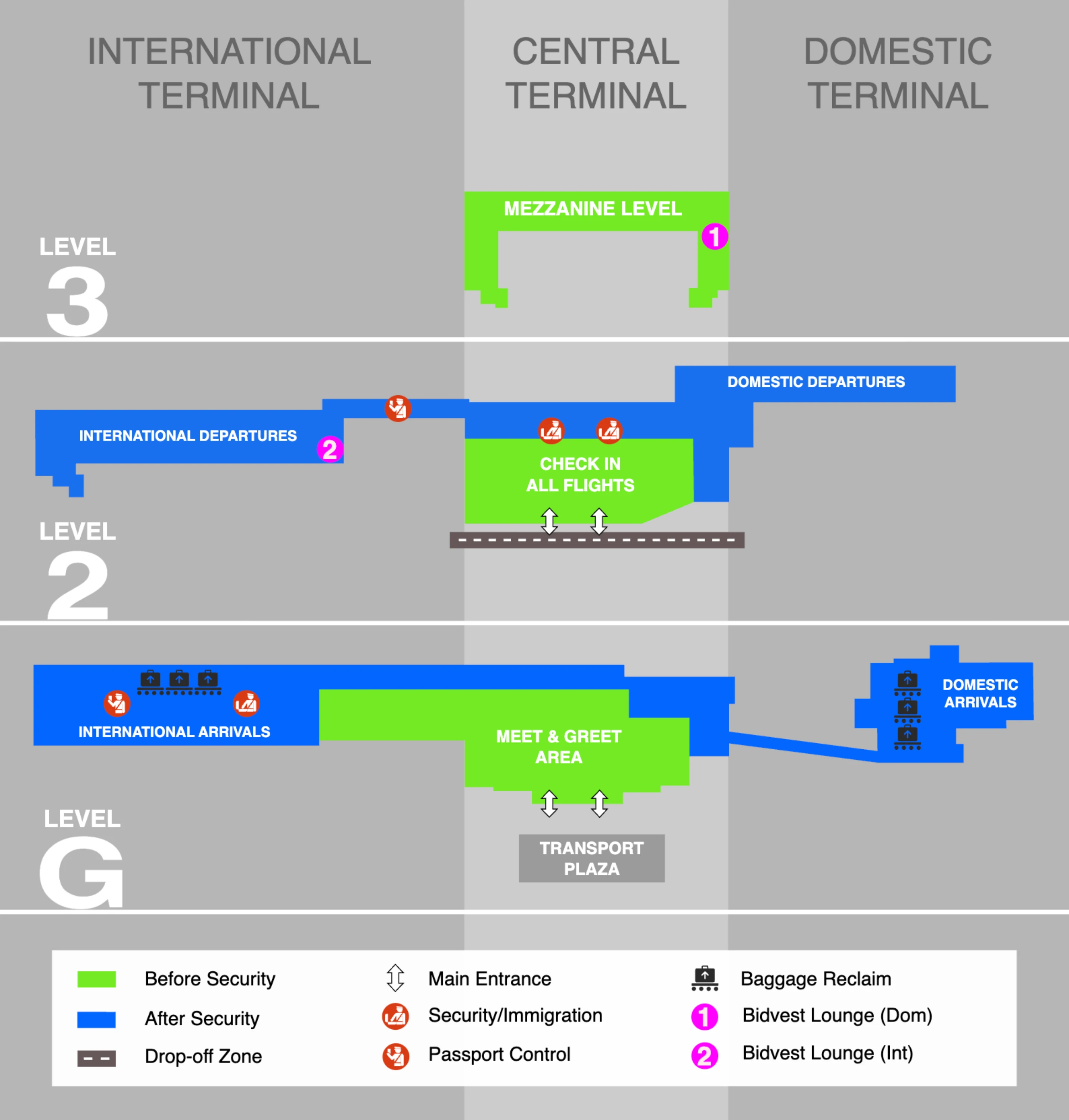
Cape Town International Airport (CPT) runs as a single “Central Terminal Building” with a dumbbell layout: International on the north side, Domestic on the south side, both connected by a shared central spine. The biggest navigational variable is vertical movement—Arrivals stay on Ground Level while Departures live upstairs on Level 2—so most stress points happen at escalators/lifts, security, and passport control. This sits within Cape Town’s main airport hub at CPT.
Map Table
| Zone | Levels | Primary Flow | Ground Connection |
|---|---|---|---|
| International Terminal | Level 0 + Level 2 | Arrivals, emigration | Parkade 1, Parkade 2 |
| Central spine | Level 0–2 | lifts, escalators, security | transport plaza frontage |
| Domestic Terminal | Level 0 + Level 2 | check-in, departures | walk to south node |
| Parkade 1 | Ground level | e-hailing pickup/drop reality | Uber/Bolt pickup zone |
Cape Town International Airport Map Strategy
- Budget for vertical friction: treat any ground-level e-hailing drop as the default, then route immediately to the central lifts/escalators to reach the Level 2 check-in hall.
- Don’t let passport control “corner queues” trap you: identify the post-security immigration entry edge early, and use it as your anchor before the line turns out of sight.
- Route to ride-hailing by structure, not by “taxi” signage: Parkade 1 first garage, ground floor; Parkade 2 equals official taxi/valet gravity and tout pressure.
- Plan for eGate/signage failure: use map-verified landmarks (security exit, DHA booth sightline, Parkade 1 boom gates) and keep a fallback path that doesn’t depend on eGates being open.
2026 Cape Town International Airport International Terminal Map + Printable PDF
Current CPT operations still hinge on the Central Terminal Building’s level split: International Arrivals feeds out on Ground Level while the main check-in hall sits upstairs, and the real-world Uber/Bolt workflow remains anchored to Parkade 1 on the ground floor. Passport control and security continue to behave like chokepoints during peak waves, so a printable 2026 map is most useful when it highlights level changes, queue origins, and the exact Parkade 1 vs Parkade 2 divide.
2026 Cape Town International Airport Map Guide
What is the exact walking route from International Arrivals baggage reclaim to the e-hailing/Uber pickup in Parkade 1?
Walking takes about 50 meters from the International Arrivals exit doors to the Parkade 1 ground-floor e-hailing pickup zone, and the critical move is turning left immediately after you exit the terminal.
From International Arrivals baggage reclaim, go through the SARS customs Red/Green channels and keep moving through the customs “buffer” corridor into the public International Arrivals Hall. Use the bookstore/retail landmark near the main glass exit doors as your aiming point, then walk through those automatic sliding doors to the curb. Immediately turn left and follow the pedestrian walkway along the terminal façade toward the first multi-storey parking structure (Parkade 1), not the second garage (Parkade 2). Enter Parkade 1 at ground level and look for the “Pick Up and Go” area by the boom-gate vehicle lanes; wait there and match your Uber/Bolt plate.
Where is the designated Uber drop-off point for International Departures relative to the main check-in hall entrance?
Parkade 1 on the ground floor is the practical Uber drop-off point, and it sits one full level below the Level 2 main check-in hall entrances.
Most e-hailing drivers avoid the elevated departures roadway that would normally drop you at the Level 2 curb outside the check-in hall. Instead, they pull into Parkade 1 at ground level—near the same “Pick Up and Go” lanes used for Uber pickup. From that Parkade 1 drop, your route is: walk out of the garage toward the terminal foyer, then use the central lifts/escalators/travelators in the main atrium to go up to Level 2 and enter the check-in hall. If you reach the Level 2 curb directly outside check-in doors, that’s the official design intent; if you’re unloading on concrete under cover in the first parking garage, you’re in the de facto Uber drop zone.
Where is the international departures eGate lane entrance within passport control (the exact landmark that identifies it before the queue turns into the cramped corner)?
The eGate entrance is the small bank of six biometric gates inside the emigration hall, visible off to the side of the manual Department of Home Affairs booth lanes once you step beyond the post-security “Immigration/Passport Control” entry edge.
After security, follow the overhead “Immigration/Passport Control” signs into the international emigration hall until you have a clear sightline to the glass-fronted DHA counters ahead. Before you commit into the belt-stanchion queue that bends and turns, scan laterally toward the side/center area of the hall for the eGate bank (six units) marked with “eGate” labeling/biometric icons. The reliable landmark is the first point where you can see both the DHA manual booths and the eGate bank in the same field of view; if you’re already being funneled by stanchions around a corner with no view of the booths, you’ve gone past the decision point.
Where does the international departures passport-control queue physically start (the exact landmark/edge where the line forms during peak congestion)?
The passport-control queue starts immediately at the exit of the security screening area, at the point where overhead “Immigration/Passport Control” signage funnels international passengers into the belt-stanchion maze.
As you walk out of the security output lane (after the scanners), you enter a high-ceilinged atrium-like space where retractable belt barriers are set up. The “front edge” where the line forms during peak congestion is the first set of those belt stanchions positioned between the security exit and the sightline to the Department of Home Affairs glass booths ahead. If the queue is tailbacked, it will spill from that stanchion edge backward into the security outflow area and toward the departures-side corridor, so anchor on the security exit threshold: once you cross it, the first visible belt line is the real start.
Where is the baggage re-check point after customs for international arrivals connecting to domestic flights (exact location/landmark)?
No dedicated baggage re-check point exists immediately after international customs at CPT, and the required re-check happens upstairs at the normal Domestic Departures check-in counters on Level 2.
After you exit the SARS customs Red/Green channels into the public International Arrivals Hall, you do not get a transfer belt or a nearby “connections bag drop” desk for most domestic airlines. Your route is to move through the central terminal spine toward the domestic side, then use the central lifts/escalators in the main atrium to go up to Level 2. Re-check your bag at your domestic carrier’s standard check-in island in the Domestic Departures hall (FlySafair, Airlink, SAA, CemAir), then proceed to domestic security as if starting a new departure.
What is the walking distance (meters) from the customs exit (International Arrivals) to the Domestic Departures check-in counters?
Walking distance is approximately 200–300 meters from the International Arrivals customs exit to the Domestic Departures check-in counters, plus a two-level climb from Ground Level to Level 2.
From the customs exit doors into the public International Arrivals hall (north node), your path runs through the central terminal spine toward the domestic side (south node), then up via the central atrium lifts/escalators to Level 2 where the domestic check-in desk islands sit. The horizontal distance depends on your exact check-in island and crowd routing, but the practical time cost comes from the vertical transit: elevator waits and slow travelators add minutes even when the floor walk feels short. If you can see the main atrium escalators/lifts, you’re on the correct spine; if you’re drifting toward Parkade 2 taxi frontage, you’ve pulled off-route.
Where is the official taxi rank / booking desk located relative to the Arrivals exit doors (exact position to avoid tout-heavy areas)?
The official taxi booking desks and rank sit straight ahead and slightly to the right as you exit International Arrivals, concentrated around the Transport Plaza frontage by Parkade 2 rather than the left-turn route to Parkade 1.
Walk out through the main International Arrivals glass doors onto the curbside plaza. To avoid tout-heavy drift, do not turn left toward Parkade 1 (that’s the e-hailing path) and do not follow anyone offering “Uber.” Instead, keep your line forward and slightly right toward the authorized operator kiosks (e.g., Touch-Down Taxis) positioned in the high-visibility transport area. The official vehicles stage in the curb lanes and/or Parkade 2 ground-floor frontage; if you see a valet-style desk, marked taxi sedans, and the second parking garage massing, you’re in the correct official-taxi zone.